UNODC and UNESCO jointly published two handbooks, one for primary and one for secondary schools, to help teachers empower their students. The handbooks assist teachers in developing students' critical thinking and empathy - skills which often do not feature prominently in school curricula. The interactive lessons build students' awareness of their rights and break down misconceptions surrounding law and justice. Exercises, games and story-telling help bring social issues to life, prompting students to take a moral stand.
Some of the lessons make reference to history and local culture, building students' understanding of how national laws evolve and societies learn to resolve conflict and live together. Other lessons equip students with the skills they need to navigate the digital age. The handbooks' activities are rooted in Global Citizenship Education, an approach which can help transform young people into agents of change who are able to constructively and responsibly engage in society.
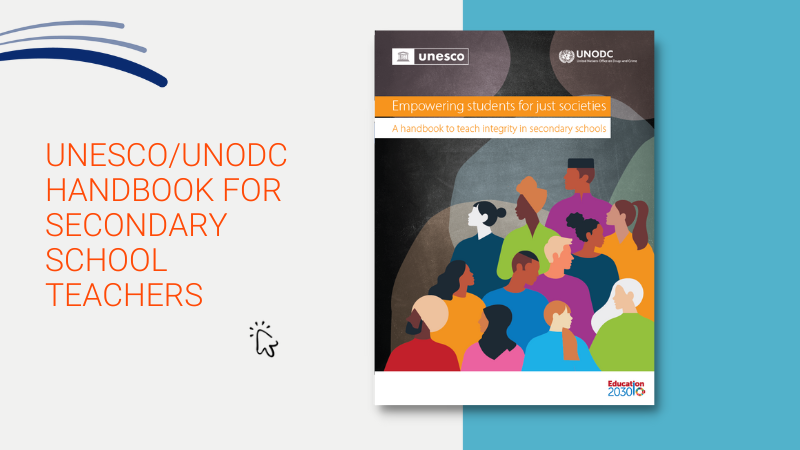


 UNESCO/UNODC HANDBOOK FOR SECONDARY SCHOOL TEACHERS