



Written by Camila F. Tort, Eduardo A. S. Figueiredo, Max Amanu
Considering that education is a major driver for personal and social development, a fundamental human right, and an essential precondition for the exercise of many other rights and freedoms, the second episode of the “YouthLED TALKS” webinar series, held in the margins of the International Day of Education, was destined to reflect upon the very complex and multifaceted interlinkages between education and corruption.
On the one hand, several contributions were given regarding how corruption negatively affects the education sector, inter alia, hindering or even impeding the realization of the Sustainable Development Goal (SDG) 4 of the United Nation’s 2030 Agenda for Sustainable Development (“ensure inclusive and equitable quality education and promote lifelong learning opportunities for all”). On the other hand, different insights were shared regarding how education can be a useful tool to tackle this terrible phenomenon, spreading values of ethics and integrity.
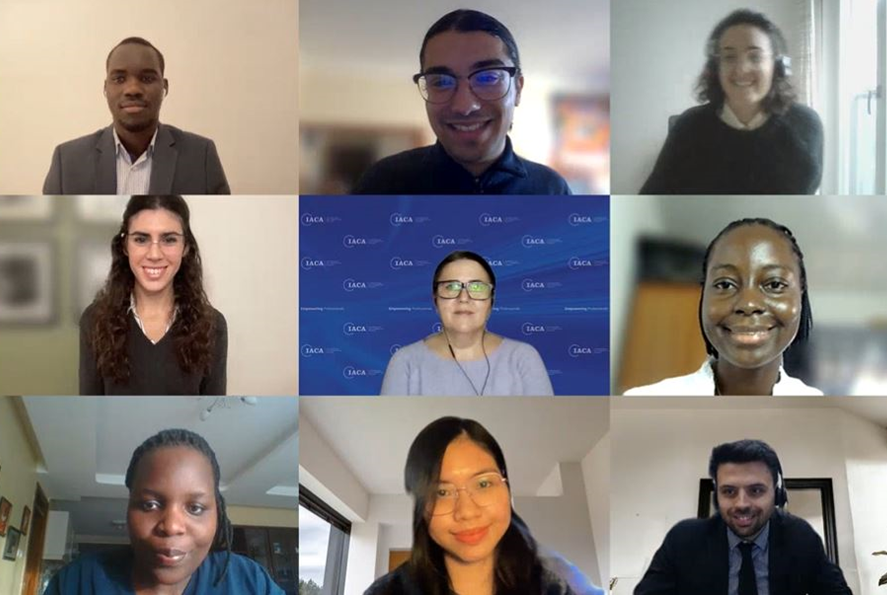
In this episode, we counted on the very valuable intervention of Ms. Roberta Falvo, Associate Anti-Corruption Expert at UNODC; Ms. Victoria Ibiwoye, Founder of “One African Child”, and Ms. Tatjana Jankovic, Project Coordinator of the Training and Capacity Development Department of the International Anti-Corruption Academy (IACA). A huge thanks to all the speakers for their wonderful contributions.
In 1948, the United Nations General Assembly adopted the Universal Declaration of Human Rights (hereinafter, "Declaration"). By taking this action, the United Nations Member States recognized a set of rights that should be regarded as fundamental human rights and, as such, must be universally protected. Specifically, article 26 of the Declaration establishes that "everyone has the right to education". More than 70 years have passed since the adoption of the Declaration, and, unfortunately, people worldwide are still deprived of their right to education.
The United Nation’s 2030 Agenda for Sustainable Development recognizes quality education as a property area for reducing poverty and improving the world we live in. However, despite the efforts dedicated to improving the quality of education and ensuring the right to education of everyone, we still have a long road ahead. Today we are faced with an education crisis. This crisis is the result of multiple factors, including corruption.
Education systems are negatively impacted by this crime, as explained by GRACE in their publication on "Knowledge tools for academics and professionals." If there is corruption in the education system, it undermines the ability of education to achieve its goals. The absence of corruption is necessary to achieve quality education for all. Nonetheless, safeguarding education from corruption is, without a doubt, a challenge.
Corruption in the education sector can take many forms, including for instance embezzlement and bribery. It can lead to the misallocation of resources, the construction of substandard schools, and the hiring of unqualified teachers. As such, corruption in the education system can result in a poor quality of education, with students receiving an inadequate education that does not prepare them for the future. Furthermore, corruption can also lead to unequal access to education, with some students being unfairly disadvantaged while others are able to access better resources and opportunities. This can perpetuate poverty and inequality cycles and undermine individuals' and societies' potential to thrive.
Additionally, corruption can be present at all levels of the education system, from national education policymaking to each little local classrooms, and also it negatively affects all levels of education, primary, secondary and tertiary. As a result, corruption in education has both economic and social impacts. Given the central role of education in human development, corruption in education deepens already existing inequalities.
Dedicating efforts and investing resources to achieve this goal is crucial to ensure that all students have equal access to quality education and to maintain the integrity of the education system. In this line, Ms. Roberta Falvo shared the work done by the GRACE Initiative during her intervention. She highlighted the importance of educating young people on topics related to ethics, integrity, and anti-corruption, particularly the importance of educating young people from a young age. To achieve this goal, the GRACE Initiative elaborated multiple tools targeted at different audiences (primary & secondary education, academia & research, and aimed at empowering youth), which are available on their web page. These tools vary from resources for the teachers to resources for the students to equip students and young people with the knowledge and skills to better understand corruption, its causes, consequences, and how to prevent and combat it. Ms. Falvo also shared that the GRACE Initiative disseminates these materials in different countries and languages and works with the Ministries of Education at the national level, aiming to create a culture of rejection of corruption among children and youth through education. Moreover, the work of the GRACE Initiative seeks to strengthen the capacity of the United Nations Member States to prevent corruption and to promote effective educational policies that promote the integration of anti-corruption education in the school curricula at different levels.
Ms. Victoria Ibiwoye stated that corruption is one of the biggest challenges in some African countries and that education can be a gateway to surpass it. In this regard, she shared that her foundation works mainly on developing soft skills for young people beyond formal education settings. For her, ethics and integrity are some of those skills which are crucial for future leaders. Finally, she reflected on the importance of analyzing education from a holistic point of view and the role of education at the level of local communities, which also contributed to change.
From the academic institutions’ perspective, Ms. Tatjana Jankovic introduced the IACA, its values, and its mission. As an academic institution focusing on anti-corruption education, the IACA’s principal mission is to deliver and facilitate anti-corruption education and training for professionals, practitioners, and young people interested in the field. With their work, the IACA promotes the right of societies to be free from corruption and contributes to the global fight against corruption while enhancing the values of integrity, ethics, accountability, and transparency, among others. Additionally, Ms. Jankovic also reflected that corruption in the education sector affects not only young people but also the wider society as it increases inequality among students in a long-term perspective. Considering the different forms of corruption in the education system, there is no universal solution to corruption in the education sector. Ms. Jankovic finished her intervention by highlighting the importance of good practices, such as promoting accountability, transparency, and the rule of law, as measures for safeguarding education from corruption.
Education is essential for development and a right that should be ensure to everyone without any sort of discrimination. Today, education is no longer fit for purpose, and, in part, this is due to the effects of corruption in the sector. Safeguarding education from corruption should be a priority, given the role of education for the future of society and the negative long terms effects resulting from corrupt practices.
If we want to efficiently transform education and make it resilient to corruption, we must:
By focusing on these tasks, we uphold this year’s International Day of Education’s theme, which was “to invest in people, prioritize education”.
Tackling corruption requires a holistic approach with multifaceted solutions.
Education is undeniably one of the most effective tools of tackling corruption. This is because it helps address some of the root causes of corruption such as poverty, helps create awareness about the dangers of corruption, at the same time acting as a powerful tool in building capacity of future guardians of integrity and anti-corruption advocates.
That being said, it is important to acknowledge that there is no single correct approach to embedding anti-corruption issues in education. Therefore, different measures and interventions are complementary to each other. This calls for strengthened multi-stakeholder approaches.
Such multidimensional cooperative approach is indeed needed in order to address the multiple dimensions of education, which can be formal, informal and non-formal, thus requiring varied strategies based on where and how the learning takes place, for instance as a lecture in a classroom or workshops organized out of the school premises or a peer-to-peer community learning event or finally a family-based teaching activity taking place at home etc.
Education should also be strengthened by the incorporation of entertainment and fair play as elements to innovate learning methods. “Edutainment” indeed opens up many more avenues for the engagement of the youth and the wider community in discussions and interventions aimed at designing new community-based and evidence-based solutions to discourage corruption as it relates to education.
In conclusion, preventing and fighting corruption require collective efforts from all people in different spheres of life and different sectors. Therefore, it is crucial for each and every one of us to identify which role we can play to tackle this phenomenon and how can we take actions to contribute to anti-corruption efforts.


