



Written by Bui Y Nhi, Tania Regalado and Uchkun Abduganiyev
The third episode of the YouthLED Talks on the margins of International Women's Day 2023 gathered international experts in anti-corruption and women empowerment to discuss how the fight against corruption is also a fight for gender equality and discover why women's and girls' empowerment is a powerful tool to foster a culture of rejection of corruption.
Corruption and gender inequality are in many ways closely connected. Generally, women perceive and experience the effects of corruption to a greater extent due to unequal gender power relations. Furthermore, certain corruption practices are a heavy burden for women because of their high sexist and degrading components. Unfortunately, these forms of corruption are not always recognized as such. They are even less likely to be reported due to a culture of shaming and victim blaming.
For all of the above, a gendered perspective and a human rights-based approach are critical elements for an effective global anti-corruption agenda. This requires the participation of all social actors and strengthening democratic institutions by ensuring a more significant involvement of women and girls at all levels.
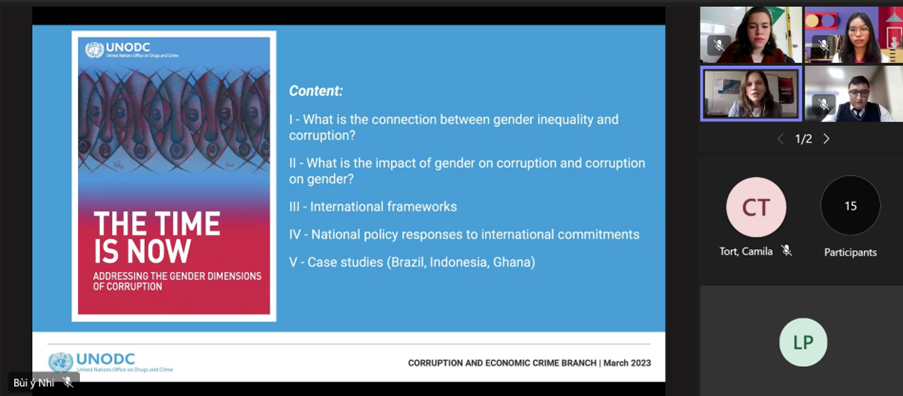
Corruption is a pervasive problem that affects individuals and communities worldwide, and it often disproportionately affects marginalized groups, including women. Due to historic socioeconomic marginalization and oppression in many societies, women are more vulnerable to corrupt practices when accessing public services or goods. They often have more to lose when these services are compromised due to corruption, creating a vicious cycle that reinforces gender inequality and further entrenches corruption.
One form of corruption that predominantly affects women is sexual extortion, commonly known as sextortion. In such cases, sexual favors are demanded as the currency of the bribe instead of money, further marginalizing women and excluding their voices from decision-making processes.
Women's vulnerability to corruption is compounded by the fact that they often have different capabilities to report or respond to corrupt conduct compared to men. Fear of retribution for reporting or refusing to pay a bribe can prevent women from speaking out against corruption. Furthermore, economic precarity resulting from corruption can indirectly harm women, such as limiting their access to education or healthcare.
Governments must recognize the link between gender equality and anti-corruption policies. Policies aimed at reducing corruption can promote gender equality by removing the barriers that prevent women from accessing public services and goods. Simultaneously, policies aimed at promoting gender equality can reduce corruption by increasing women's participation in decision-making and ensuring their voices are heard.
In addition, efforts to combat corruption and promote gender equality must recognize the intersectionality of these issues. Women who belong to other historically socially excluded groups, such as women of color or LGBTQ+ women, are at even greater risk of experiencing the negative effects of corruption. To effectively address corruption and promote gender equality, policies and strategies must consider the unique experiences and needs of women from all backgrounds.
The fight against corruption and gender inequality requires the involvement of everyone, including young people. We must recognize the impact of corruption on women and promote their inclusion in decision-making to help tailor more effective anti-corruption policies and practices.
Here are some practical steps we can take to tackle corruption from a gender perspective:
Only by working together and engaging everyone can we create a better future for all, one where corruption and gender inequality are no longer pervasive issues. Let's join hands and make our communities and societies more just and equitable.


