 ABOUT UNODC CODING4INTEGRITY HACKATHONS
Recognizing the growing interest in digital innovation as a catalyst for youth action against corruption, the Global Resource for Anti-Corruption Education and Youth Empowerment (GRACE) initiative of UNODC launched the "Coding4Integrity" youth anti-corruption hackathon series in 2021. This initiative harnesses the energy and potential of young people to innovate and develop technological solutions for corruption-related issues affecting their communities.
Hackathons, which bridge digital innovation and social entrepreneurship, offer young participants a unique opportunity to deepen their understanding of corruption-related topics while enhancing their social, leadership, and technical skills. In light of recent advancements in artificial intelligence, these events have become even more crucial, empowering youth to leverage AI to create cutting-edge solutions to combat corruption.
GRACE collaborates with a diverse network of partners from both the public and private sectors to ensure a comprehensive and impactful experience for all young coders. This collaboration not only provides participants with valuable resources and mentorship but also offers the possibility for their tech-based solutions to be developed and potentially adopted by various stakeholders, driving meaningful change in their communities.
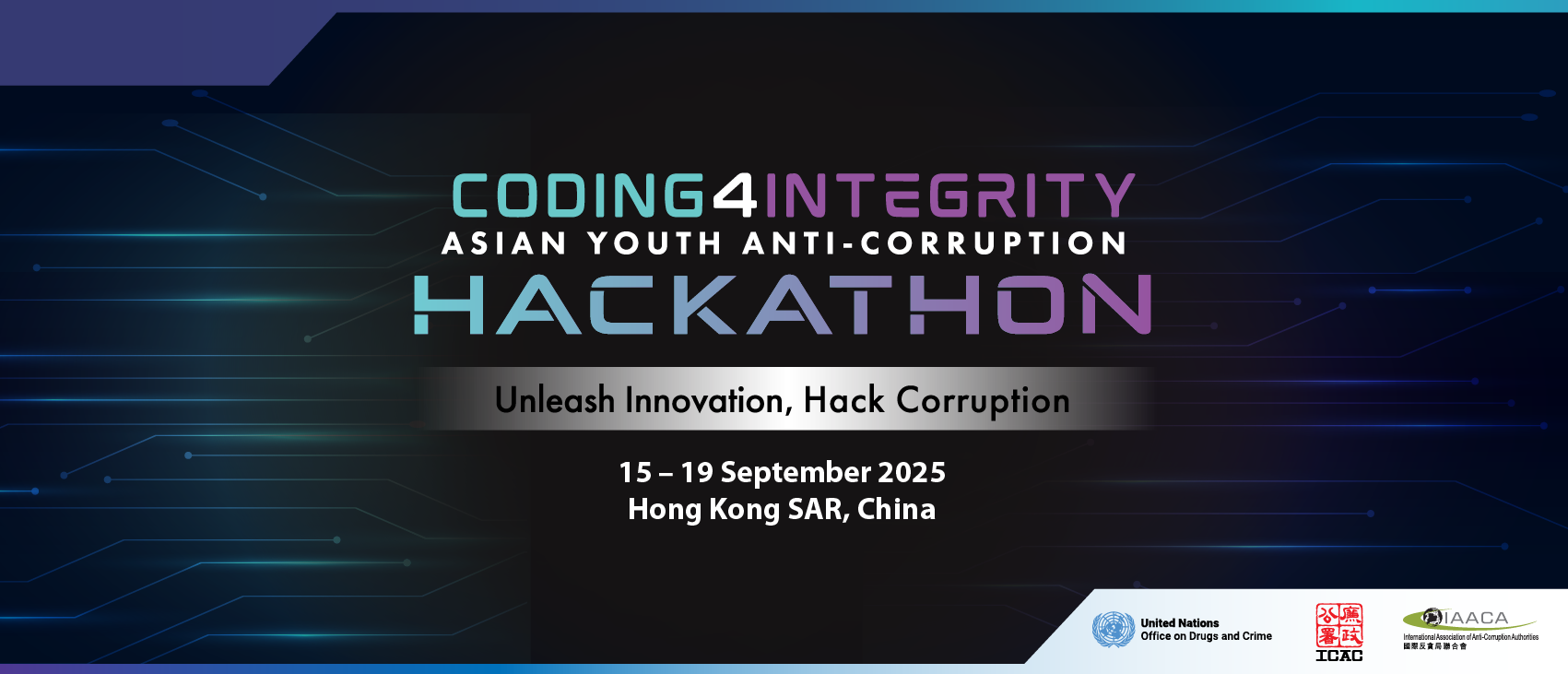
CODING4INTEGRITY ASIAN YOUTH ANTI-CORRUPTION HACKATHONThe United Nations Office on Drugs and Crime (UNODC), in collaboration with the Independent Commission Against Corruption (ICAC) of Hong Kong, China, and the International Association of Anti-Corruption Authorities, will co-host the “Coding4Integrity Asian Youth Anti-Corruption Hackathon” in September 2025. This initiative aims to engage young people and promote the use of technology in fostering a culture of innovation in the fight against corruption.
This hackathon presents a unique opportunity for youth to inspire States Parties by showcasing their innovative solutions at the 11th Session of the Conference of States Parties to the United Nations Convention Against Corruption, which will take place in Qatar in December 2025.
Join us now – Unleash Innovation, Hack Corruption! Together, we can drive meaningful change and inspire global leaders in the fight against corruption.
ABOUT THE PROGRAMMEThe Hackathon consists of a series of events including an online “Bootcamp” delivered by the representatives of UNODC, ICAC, and experts from related fields to assist the participants in developing their solution prototype in late-June 2025 and a five-day in-person participation in the programme from 15 to 19 September 2025 in Hong Kong, China.
As part of the programme, participants will visit leading technology companies in Hong Kong and the Mainland of China to gain insights into cutting-edge innovations that might inspire and inform their solution development. At the grand finale, they will present their innovative ideas in front of a judging panel composed of experts from relevant fields and prominent leaders of society.
 WHO ARE WE LOOKING FOR THEMATIC AREAS AND CHALLENGES
The hackathon participants will be asked to develop an ICT-based idea or solution that addresses one of the following challenges related to the promotion of anti-corruption, ethics and integrity in Asia.
Public procurement channels vast amounts of public funds and therefore demands strict safeguards against corruption and malpractice. Although modern e-procurement platforms have digitised workflows and improved record-keeping, many still lack built-in corruption prevention and detection controls or advanced analytics that actively support decision-makers. This gap means that irregularities—especially in lower-value purchases where oversight is lighter—can escape detection.
Your challenge is to leverage AI, big-data analytics, or any other appropriate technologies to help contracting authorities and procurement officers to detect and prevent irregularities such as conflicts of interest, inflated pricing, bid-rigging and collusion, fraudulent or duplicate payments, unnecessary or split purchases, biased technical specifications, misappropriation or diversion of funds.
Match-fixing poses a serious threat to the integrity of sports, resulting in loss of trusts among fans, sponsors, and governing bodies. As it often involves a network of players, coaches and external actors attempting to manipulate outcomes for illicit gains, the covert nature of match-fixing makes it difficult to detect and prevent. Furthermore, sport is often linked to illegal betting, money-laundering and other transnational organized crimes.
To enhance sports integrity, your challenge is to develop a solution that assist the authorities or sports organisations to effectively detect, identify, investigate and fight corruption in sports. The solution could incorporate features such as atypical performance analysis of athletes, monitoring of betting markets, and social media sentiment analysis. These elements may help identify potential match-fixing activities, enabling authorities to take early action and protect the integrity of sporting events.
Corruption in finance can take many forms, from bribery of bank staff members for loan approval to insider trading of stock. It is often related to other forms of crimes as well including fraud, misappropriation of funds and money laundering.
Your challenge is to develop a solution that can prevent and detect these fraudulent activities or suspicious transactions in the finance sectors.
Construction of infrastructure which involves large amount of capital and investment is prone to corruption. Corruption in infrastructure projects can have severe impact on the quality of infrastructure, the cost of the projects and the time taken for completion of projects. Malpractices like using inferior materials, carrying out substandard works and falsified test results being covered up as a result of bribery are not uncommon, threatening the quality of infrastructure and public safety. Experience has shown that detecting malpractice in large-scale infrastructure projects after completion is often difficult, if not impossible—unless something truly serious occurs.
Your challenge is to prevent corruption in infrastructure projects by developing a solution that addresses irregularities in contract awarding, project administration, and works supervision. Corruption in these areas can take many forms, including bid-rigging, favouritism, kickbacks, mismanagement of funds, inflated project costs, deliberate delays, and connivance at substandard work. The solution should aim to detect, prevent, and mitigate these corrupt practices, ensuring transparency, accountability, and proper use of public resources throughout the lifecycle of infrastructure projects.
AWARDS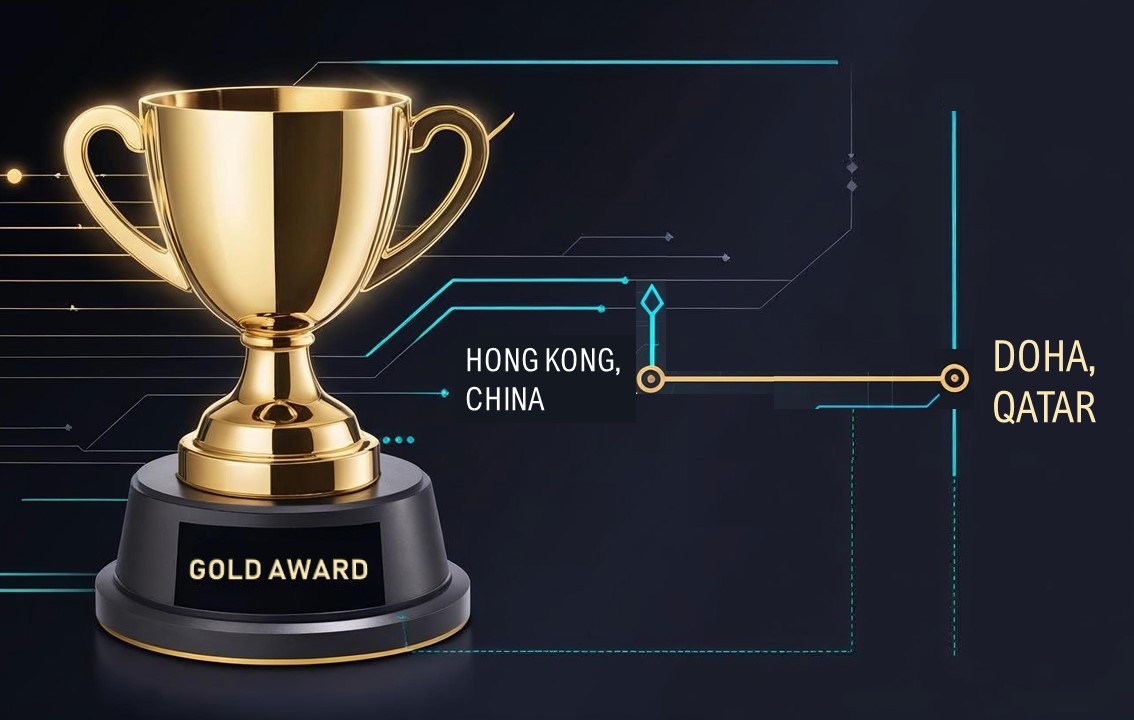
The team awarded the “Gold Award” will have the privilege to present their solution at a special event held on the margins of the eleventh session of the Conference of the States Parties to the United Nations Convention against Corruption (CoSP11) which will take place in Doha, Qatar from 14 to 19 December 2025. Travel and accommodation for the Gold-winning team will be provided.
Apart from the “Gold”, “Silver” and “Bronze” awards, special recognition awards will also be presented to highlight outstanding achievements in other categories.
USE OF IMAGEUpon registration, the participants grant and authorize the organizing team, free of charge, in a global, integral, permanent, irreversible, irrevocable, and exclusive way, all rights of use of image, name, and voice for dissemination of Coding4Integrity project, through all the media used in the events.
CODE OF CONDUCTUNODC and the partners of Coding4Integrity are committed, at their highest level, to the promotion, safeguard and guarantee of human rights, gender equity, respect for diversity, and a culture of peace and rejection of violence.
By participating in the event, all participants, sponsors, partners, volunteers, and staff commit to ensuring respect for diversity in terms of race, gender, sexual orientation, age, disability, physical appearance, nationality, ethnicity, or religion.
ZERO TOLERANCE HARASSMENT POLICYBy participating in the event, all persons – participants, sponsors, partners, volunteers, and employees – commit to a zero-tolerance policy established by the organizing team regarding harassment.
In case of a report and confirmation of harassment of any nature, the perpetrator will be summarily removed from the project environment and prevented from returning. If the perpetrator is part of a competing team, the organisation will decide on the individual disqualification of the person responsible. There will be no team disqualification, except in cases of collective consent and acquiescence, by action or omission, to the practice of harassment.
For this purpose, harassment is defined as any offensive verbal or non-verbal comments related to gender, age, sexual orientation, disability, physical appearance, body size, race, ethnicity, national origin, or religion, as well as sexual images, deliberate intimidation, stalking, photography or audio/video recording without consent, inappropriate physical contact, and unwanted sexual attention.
The organising team is committed to providing a safe and anonymous reporting environment.
FREQUENTLY ASKED QUESTIONSCorruption is a complex social, political and economic phenomenon that affects all countries. Corruption undermines democratic institutions, slows down economic development, and contributes to governmental instability. Corruption attacks the foundation of democratic institutions by distorting electoral processes, perverting the rule of law, and creating bureaucratic quagmires whose only reason for existing is the solicitation of bribes. Economic development becomes stunted because of corruption since foreign direct investment is discouraged, and small businesses within the country often find it impossible to overcome the "start-up costs" required because of corruption.
You are encouraged to have a look at the GRACE Knowledge Hub materials, to familiarize yourself with key topics and notions. You are likewise invited to read the following background materials:
For young software developers/coders, the prerequisite for taking part in the hackathon is to possess some basic programming skills. But no one expects you to be a seasoned coder to develop your idea. However, to impress the jury and maximize your chances of winning the hackathon, we encourage you to level up your coding skills in preparation for the hackathon. This will allow you to spend less time at the event on learning how to code (which isn't bad, as hackathons are also about learning new things and skills), but instead, you will have more time to develop your ideas and skills. It will be important to build skills in one of the coding languages relevant for both mobile and web development (for instance, Java, Javascript, Python or C++ etc.), as well as the use of low-tech solutions (such as chatbots, data visualization, maps).
The objective of the hackathon is to give young developers the chance to develop their own ideas on promoting anti-corruption, transparency, ethics and integrity in the Asian Region through technology and digital innovation. The aim is to foster youth engagement in innovation and technology.
From a pitch presentation, the judging committee will evaluate your solutions based on pre-defined evaluation criteria. The evaluation criteria can be found here: Coding4Integrity Hackathon 2025


