|
|
UNODC DEVELOPS NEW AND INNOVATIVE METHODOLOGY TO EMPOWER YOUTH TO UNDERSTAND THE INTERLINKAGES BETWEEN CORRUPTION AND CLIMATE CHANGE |
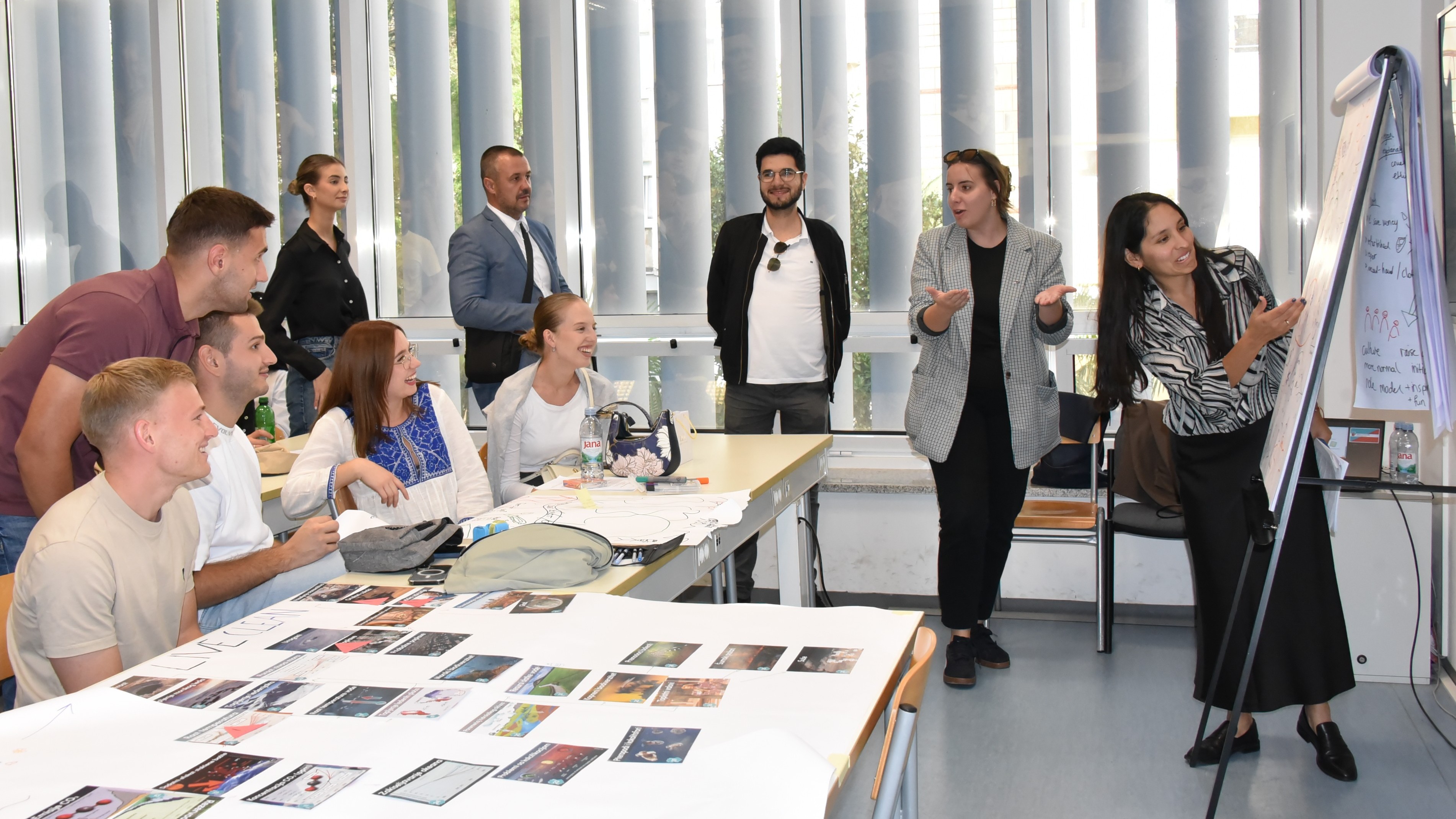
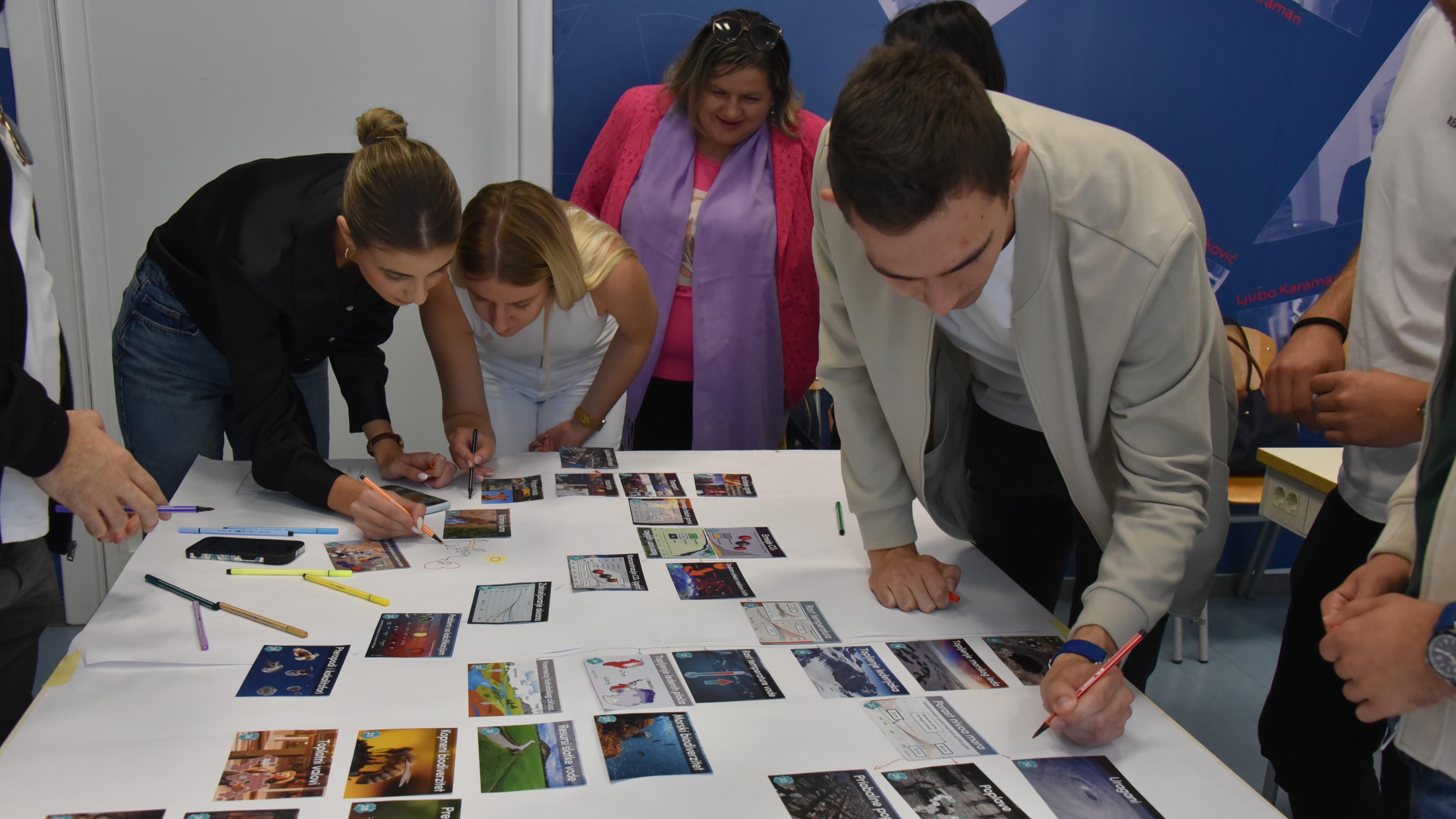
Mostar, Bosnia and Herzegovina, September 2025 — UNODC and its GRACE initiative continue the drive to develop new and adapt existing innovative anti-corruption educational materials to further its goals to promote integrity and strengthen the capacity of educators and teachers globally. As part of this process, the GRACE Initiative and the Environment team of the Corruption and Economic Crime Branch jointly developed a new methodology and organized the workshop in order to pilot a novel approach to bridging the gap between understanding climate change and the links between climate change and corruption. Based on and intended to accompany the Climate Fresk methodology, the new methodology builds on the Fresk that participants have prepared showcasing the cause and effect of climate change. The methodology was tried and tested with a group of internal UNODC colleagues from across the whole as well as representatives of the YouthLED Integrity Advisory Board, which provided valuable inputs on how to make the exercises more accessible for young people and how to ensure that the key messages are conveyed by the end of the two day agenda.
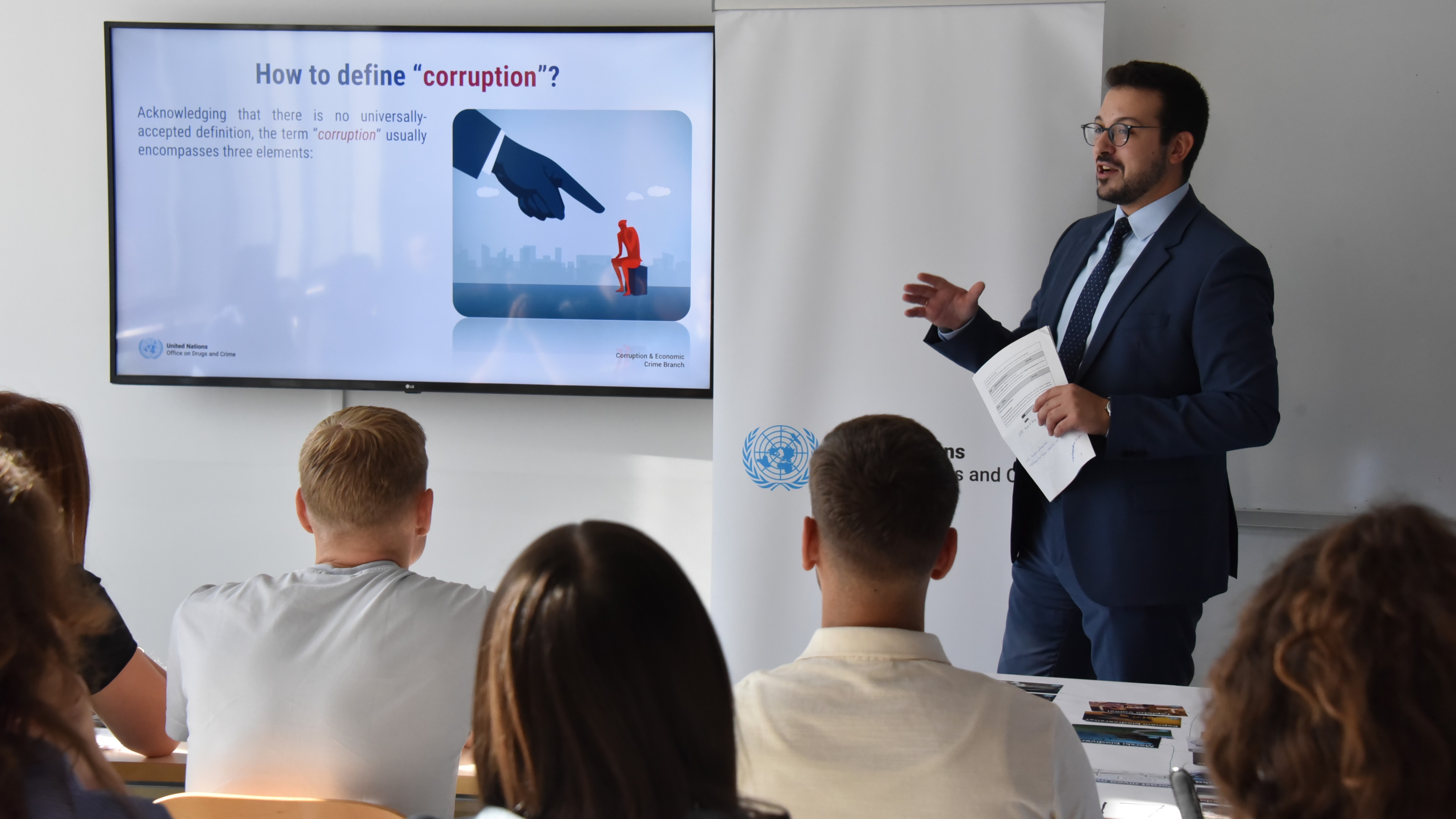
Following the refining of the methodology, UNODC, in cooperation with the Agency for the Prevention of Corruption and Coordination of the Fight against Corruption (BiH APIK) and the University of Mostar (SUM), organized a two-day workshop to strengthen the understanding of the interlinkages between corruption and climate change, promote youth engagement, and introduce innovative collaborative methodologies for education and advocacy.
Students from different disciplines took part in interactive sessions, including engaging through the Climate Fresk methodology as well as exploring how corruption is capable of exasperating the effects of climate change and severely undermining climate action and the efforts of governments, collectives and individuals to prevent, mitigate and adapt to climate change, through collaborative discussions, creative activities, and reflective practices.
More specifically, students examined the causes and impacts of climate change, its connections to corruption, and strategies to promote transparency, integrity, and accountability within their communities. By the end of the two-day Climate Change and Corruption workshop, the students had acquired hands-on experience with collaborative educational tools and expressed their commitment to disseminate the knowledge and methodologies gained to colleagues and wider networks.
This pilot activity contributes to the work of UNODC’s GRACE initiative, supporting the implementation of UNCAC Article 13 and promoting youth empowerment in addressing corruption and climate-related challenges. It is expected that more workshops will be rolled out with similar groups around the world in 2026.