|
|
SHAPING FUTURE LEADERS: ETHIOPIAN AND MALTESE TEACHERS CHAMPION ETHICS AND INTEGRITY |
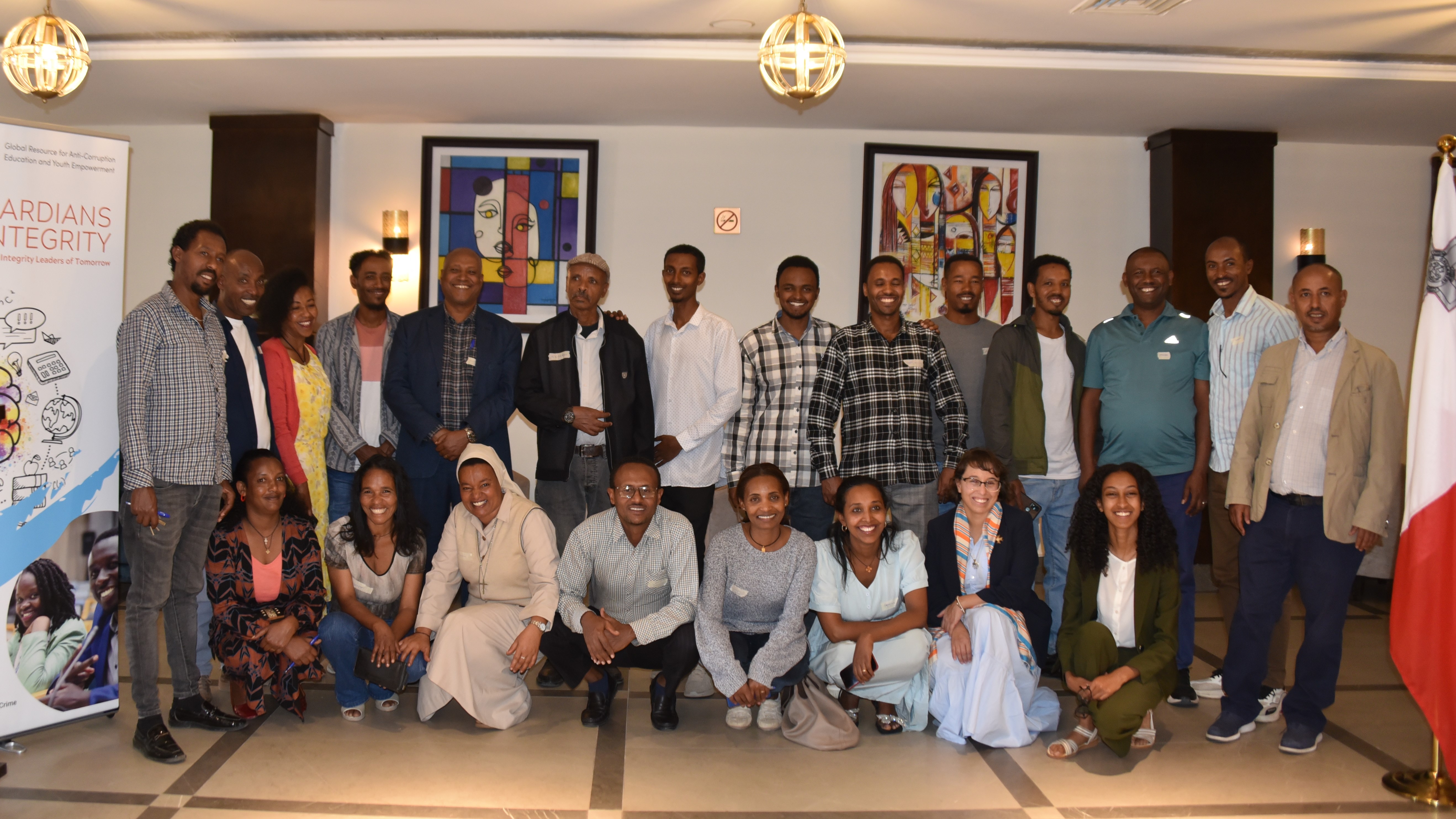
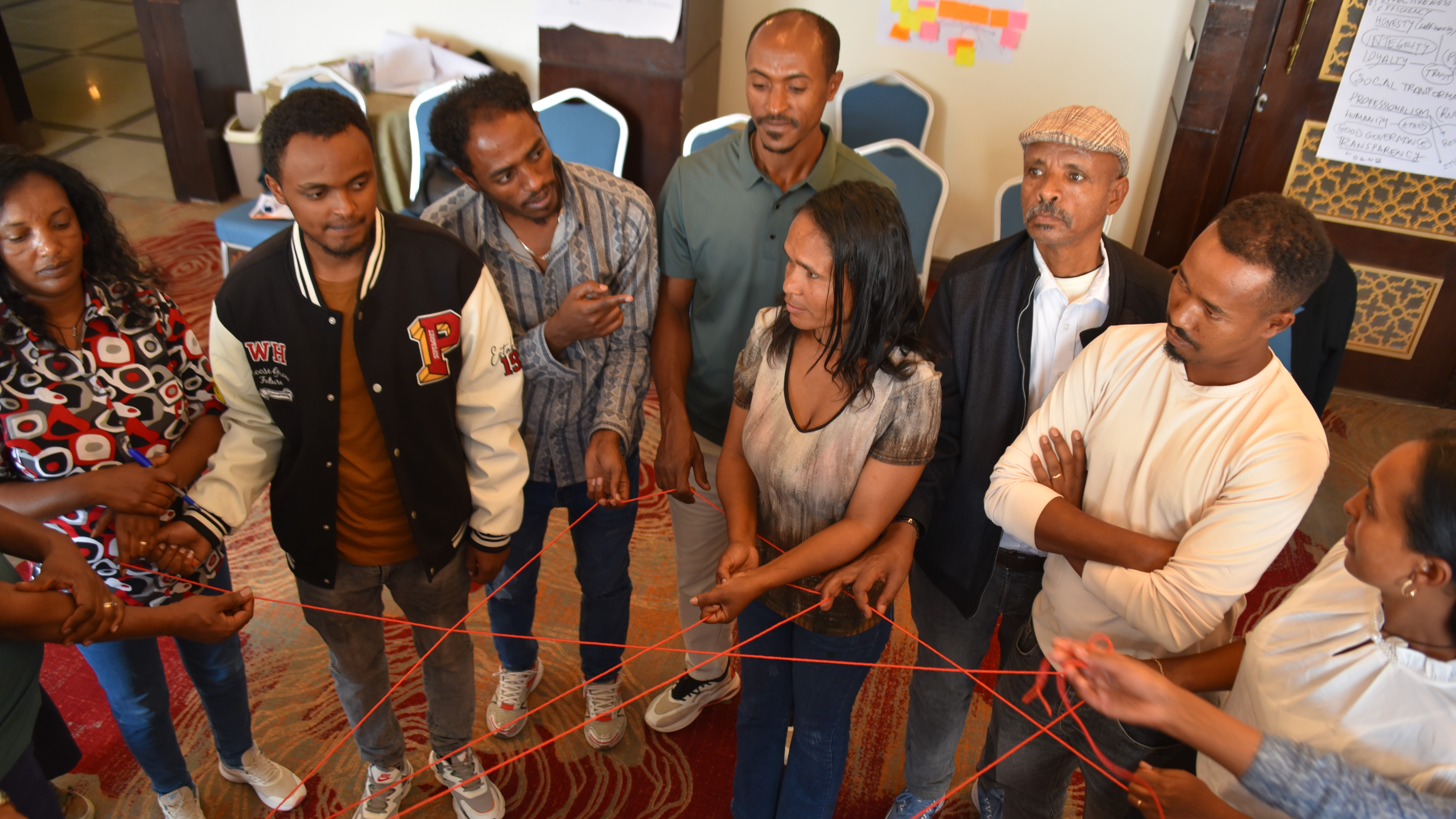
Bishoftu, Ethiopia, 25-27 April 2025 — Secondary school teachers from Ethiopia gathered in Bishoftu for an intensive three-day Training of Trainers (ToT), reaffirming the power of education to advance integrity and combat corruption not only in Ethiopia but also across borders.
Organized by the United Nations Office on Drugs and Crime (UNODC) and funded by the Government of Malta, the training aimed to empower educators to deliver anti-corruption, ethics, and integrity education in using tools prepared by the Global Resource for Anti-Corruption Education and Youth Empowerment (GRACE) initiative. The workshop is a critical milestone in UNODC’s new pilot project “Connecting Classrooms” which uses an innovative learning model by virtually connecting four classrooms in Malta with four classrooms in Ethiopia to foster a culture of intercultural tolerance, a fundamental value underpinning a culture of integrity.
“Schools have so much power over children — to teach them everything, including values. For values, it is more effective for them to learn from practice than theory alone, to which the teachers serve as a role model for the student.” — Tamirayehu, Ethiopia
Supported by the Addis Ababa Bureau of Education, 19 teachers from five institutions — four secondary schools, namely Kidane Meheret School, Kokebe Tsibah Secondary School, Liberal Catholic Cathedral School, and Etege Menen Girls Boarding School, and Kotebe University of Education — came together for the training. Teachers specialized in a range of subjects, from Civics and Moral Education to ICT, History, and Biology.
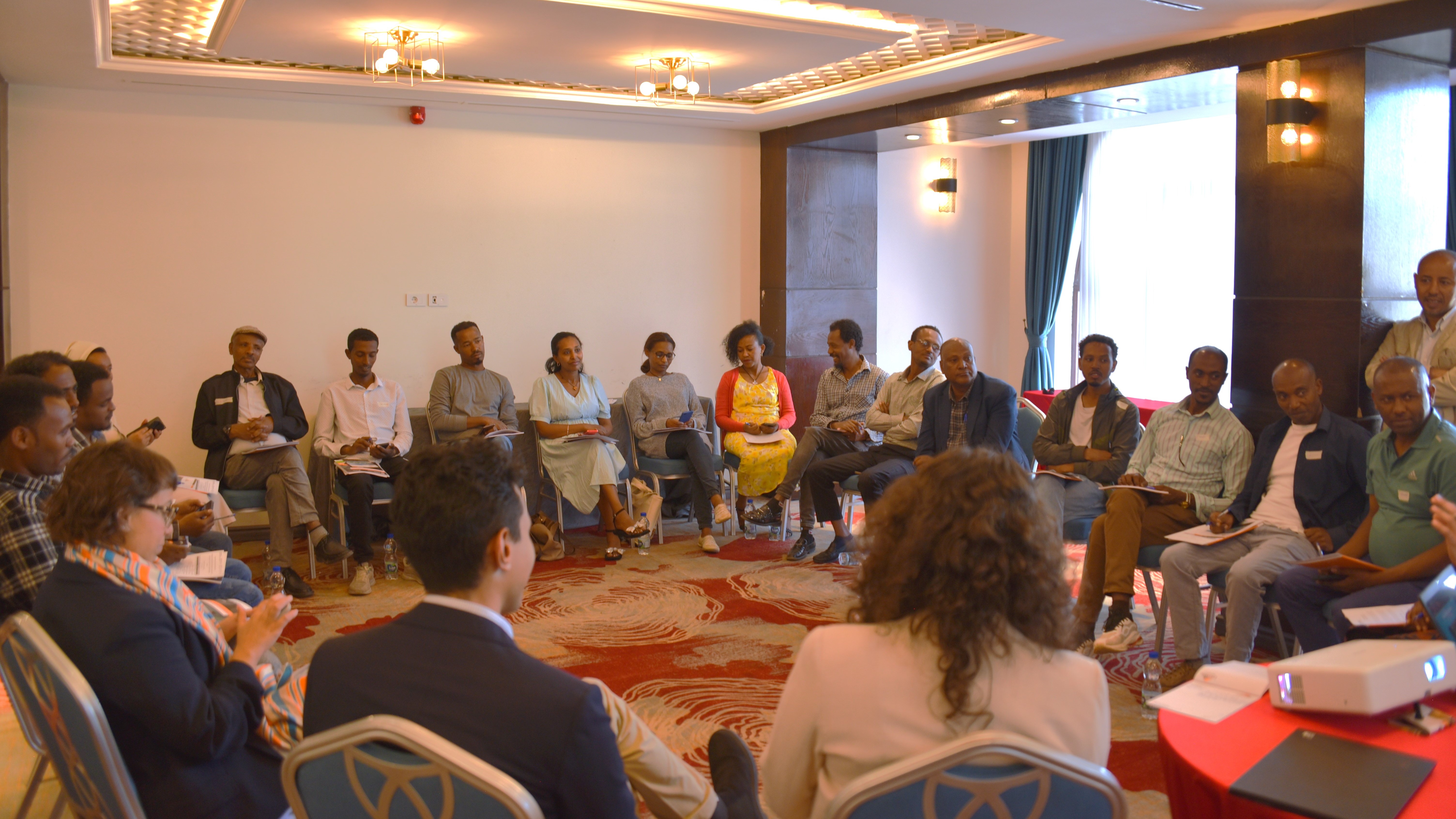
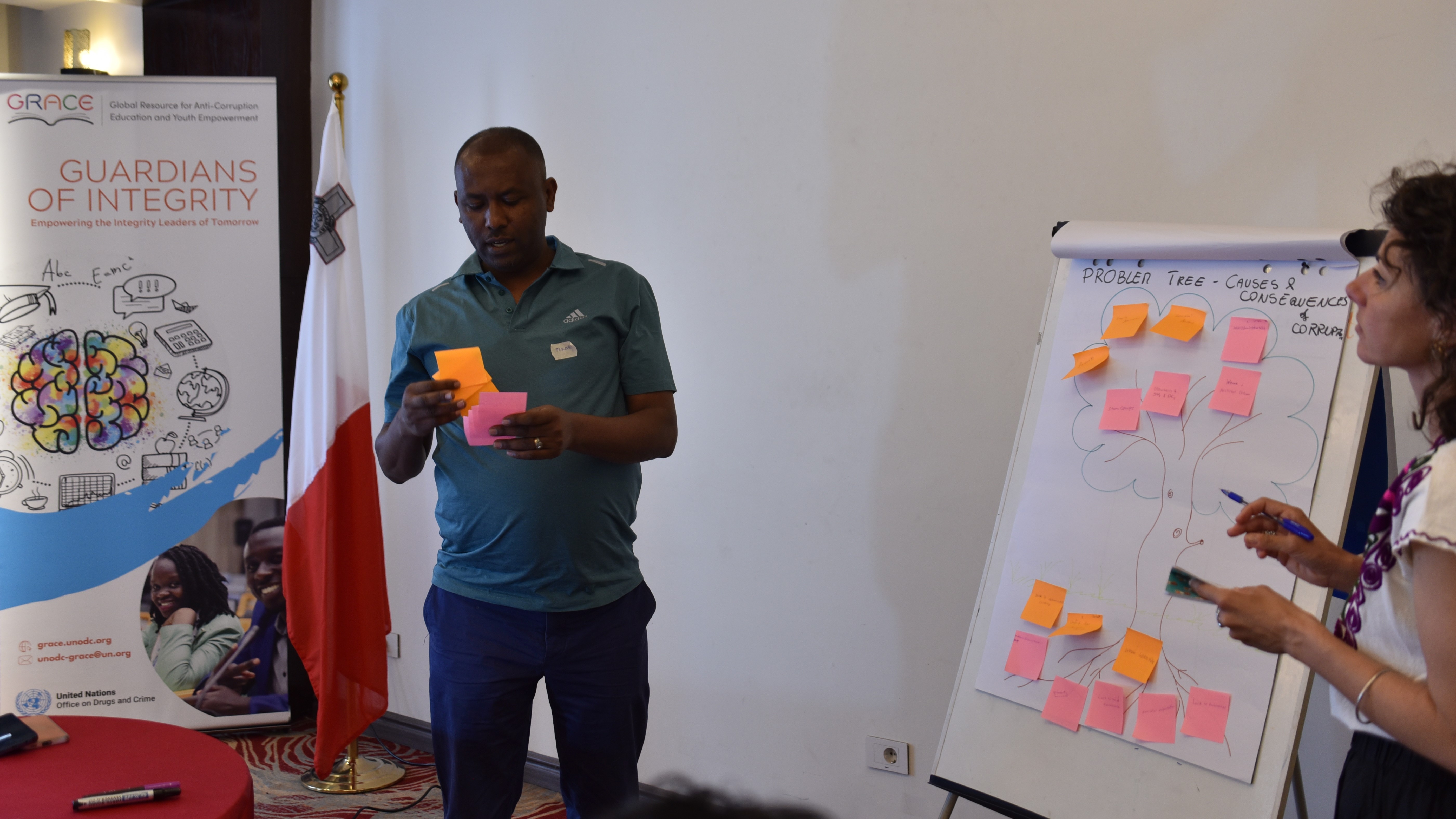
Teaching values and fostering behavior change requires the employment of participatory, learner-centered approaches. These are fundamental not only for anti-corruption education but also for other subjects of study. Teachers explored the roots and consequences of corruption, reflected on ethical decision-making, and were equipped to use the UNODC/UNESCO Integrity Handbook for Secondary Schools as a tool to teach these topics. Practical workshops allowed them to contextualize lesson plans and practice facilitation strategies.
“It’s better to teach them [students] critical thinking to support them in identifying right from wrong on their own.” — Abyssinia, Ethiopia
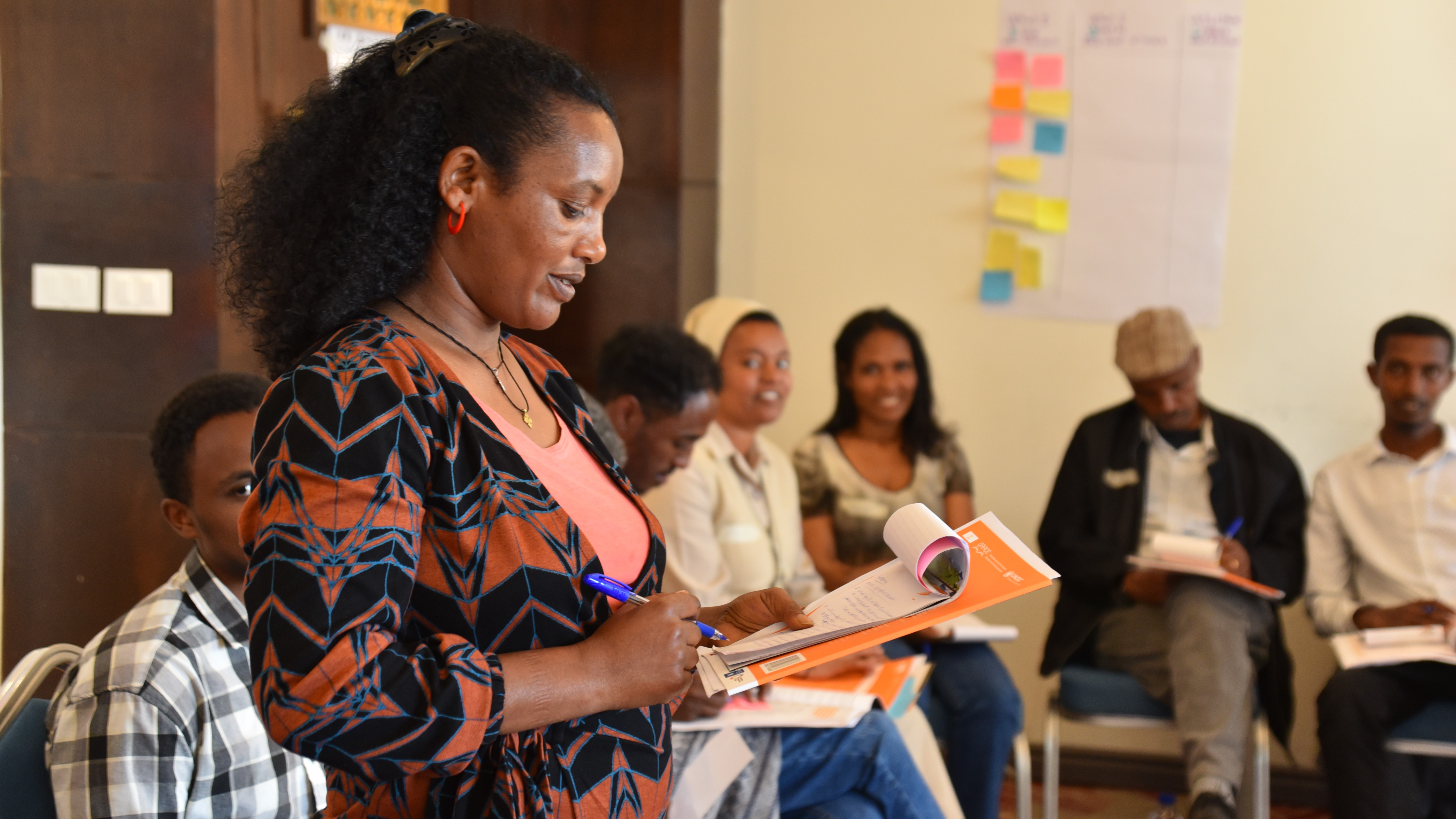
Educators were not only trained in how to deliver lessons — they were inspired to embody integrity in their own daily lives. Icebreakers, group activities, and mock lessons served to build confidence and community among the participants, many of whom expressed their excitement to implement their learning in the classroom. To highlight the lasting impact of seemingly small contributions made by teachers in fostering ethical values and integrity among students, one participant remarked:
“There is an Ethiopian saying የውሃ ጠብታ ድንጋይ ይሰብራል – a drop of water can slowly make a whole in the rock and break through it." — Mekonnen, reflecting on the long-term impact of values-based education.
To ensure a reciprocal and collaborative approach, Maltese teachers also participated in a similar training earlier this year, highlighting the project's commitment to shared learning. It was a 3-weeks online training on anti-corruption, ethics and integrity education at secondary level and teachers from St. Thomas More College, St. Joseph Mater Boni Consilii, Sacred Heart Senior School in St. Julians, St Nicholas College, Secondary School, Dingli, St. Catherine's High school, St Clare College, Secondary School, Pembroke and Maria Regina College, Secondary School, Mosta (Zokrija) participated. As Lisa, one of the teachers, commented: “What I look forward to the most, is helping the students become more open minded and less self-centered, realizing that their actions have the power to make a difference and create change for people on the other side of the world.”
With this training, the trained teachers are better equipped to empower the next generation to become agents of change. Their students will soon join their peers in Malta for the next phase of the Connecting Classrooms project, engaging in joint lessons that transcend borders and promote mutual understanding.
As the GRACE initiative continues to champion whole-of-society approaches to fighting corruption, efforts like this remind us that the classroom remains one of the most powerful places to shape the future.