|
|
INCLUDING YOUNG PEOPLE TODAY TO PREVENT CORRUPTION IN THE FUTURE |
Brunei Darussalam, January 2025 — In September 2024, world leaders gathered in New York to adopt the Pact for the Future, to which the Declaration for Future Generations was annexed. One of the core pillars of the Pact for the Future is a commitment to more meaningful opportunities for young people to participate in the decisions that shape their lives, especially at the global level. Members of UNODC’s YouthLED Integrity Advisory Board contributed extensively to the consultations leading to this Pact.
Prior to that, UNODC’s Global Resource for Anti-Corruption Education and Youth Empowerment (GRACE) Initiative and its YouthLED Integrity Advisory Board had been working to bring Meaningful Youth Engagement (MYE) in anti-corruption work. The years 2023 and 2024 have seen many achievements and examples showing why meaningfully including young people in anti-corruption work matters. “It has been a long process, but we can say we are starting to yield the results” says Roberta Falvo, Anti-Corruption Associate Expert, who has been a driving force in advancing youth empowerment in UNODC.
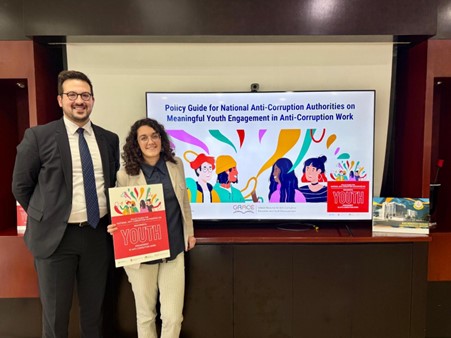
One core partner of the GRACE Initiative is the Independent Commission Against Corruption (ICAC) of Hong Kong S.A.R, China. Joint research to understand how to meaningfully engage youth in anti-corruption work was conducted, with more than 70 anti-corruption authorities responding to the ICAC-UNODC survey. The study clearly showed that anti-corruption authorities saw an advantage in engaging youth in their work, but it also highlighted that there was a lack of guidance on how anti-corruption authorities could achieve this. In order to address this gap, ICAC and UNODC in close consultation with a dedicated youth board, developed a policy guide on MYE in anti-corruption work for anti-corruption authorities. The tool provides a plethora of useful research, instruments and resources, some of which have been directly developed, reviewed and advised by young anti-corruption advocates from all over the world.
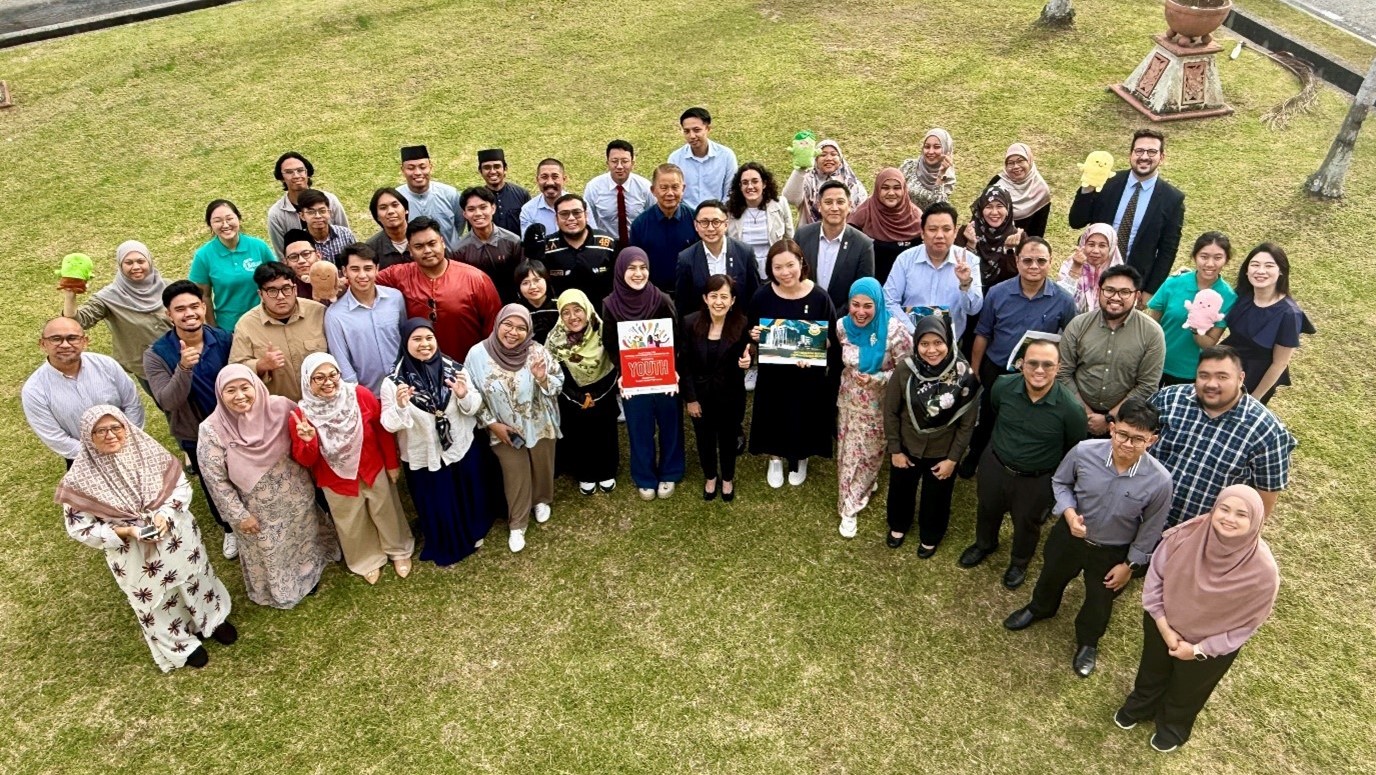
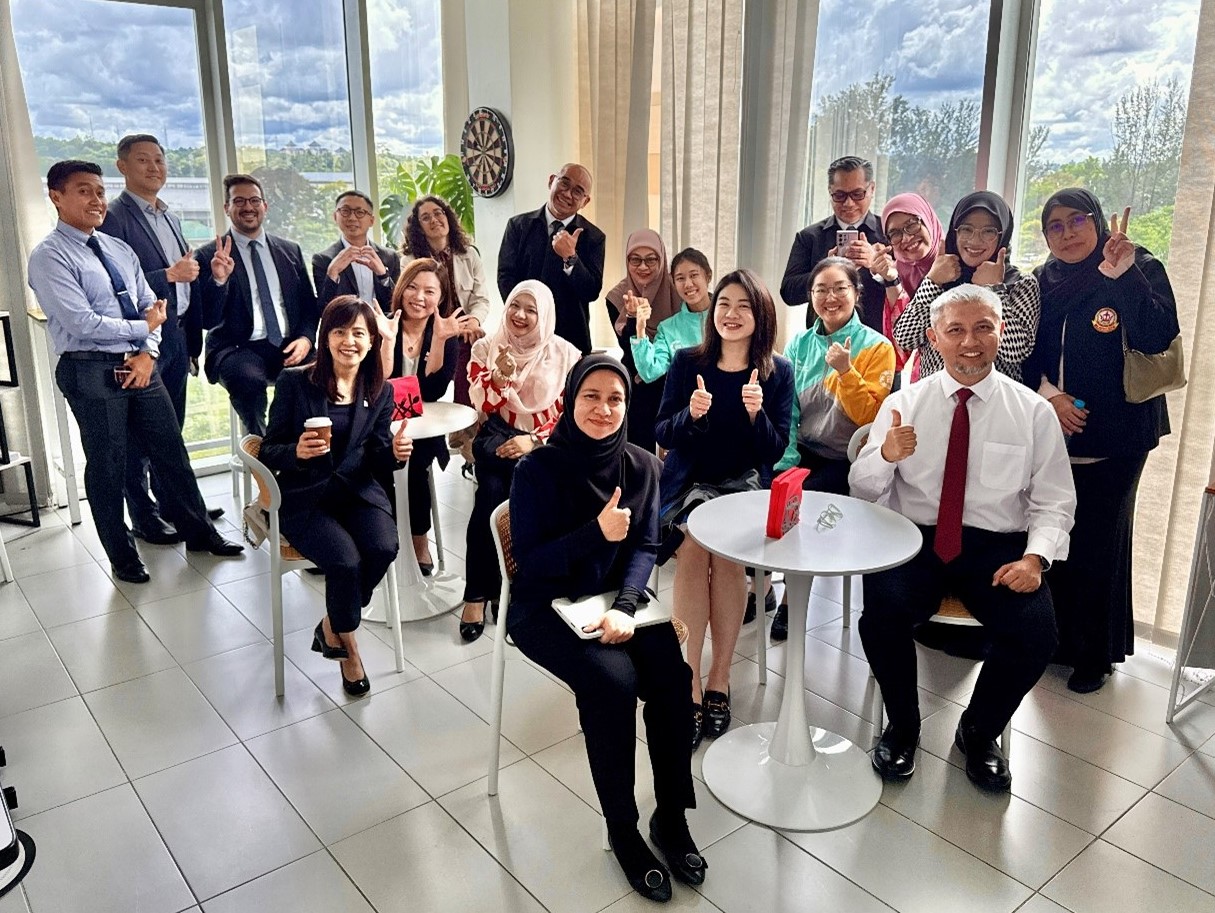
A training methodology was developed accordingly and in January 2025, ICAC, UNODC, YouthLED Board members and ICAC Elite Programme members came together in Brunei Darussalam to deliver the first-ever training for youth, civil society and anti-corruption officers on MYE in anti-corruption using this tool.
The partnership between diverse set of stakeholders brought much value to the training. Ada Chan, Chief Youth & Education Officer at ICAC shared that “we are happy to co-deliver this training in partnership with UNODC, which can bring a truly global perspective on challenges, lessons learned and best practices of doing MYE in anti-corruption”. One of the participants, Muhammed from the Brunei Youth Council when asked if the training was an example of MYE in practice, shared the added value of virtually connecting with Dexter, a YouthLED Board member and active anti-corruption advocate: “Around other parts of the world, young people are having the same feelings, the same challenges; it has opened my mind”.
Bringing all these young people together, using technology to connect them across continents is the advantage of the YouthLED Board. As Dexter best captured, “When I connect with youth on the board, I realize that they are doing the same work and are moved by the same passion for corruption free society, and I feel that I am contributing to a bigger goal”. Ellie, a young person from Brunei, felt similarly during the MYE training “being together reduces the sense of isolation among Bruneian youth. We are passionate but are isolated and don’t know where to meet each other. In opportunities like these we can finally be connected”.
Ellie also added “learning about the five MYE themes was new to us, I realized that a lot of youth engagement activities are often tokenistic, that is a big issue with the youth programmes in Brunei”.
The policy guide highlights the five MYE themes, namely: (i) diversity and inclusion, (ii) engagement-enabling environment, (iii) intergenerational collaboration, (iv) quality youth participation, and (v) youth empowerment, and provides practical ways to apply these to the work of anti-corruption authorities.
Creating safe spaces for learning and discussing about corruption can be a way to break the silence around this delicate topic. Rashida, a student passionate about social justice from Brunei, shared that “corruption is not a topic that people will talk about openly. So, I am hoping that through this we can have more transparency”.
Communicating with young people should be targeted. During the two-days training, officers of the Anti-Corruption Bureau (ACB) of Brunei worked with the young participants not only to build practical MYE plans, but also to make fun and engaging social media reels.
Catering for the needs of every age group is exactly the added value of initiatives such as GRACE and the ICAC’s i-junior programme. An example is the newly published “Little Coffee Bean” illustrated children’s book. Starting to educate on these topics as early as possible is the way to build a society that upholds integrity.
Brunei’s ACB officers came out of the training energized. As Kairo Nisa, an investigator, shared: “we learned how youth can play a critical role in anti-corruption initiatives. It was enlightening to see how ICAC Hong Kong and UNODC have actively involved youth in the efforts to make change and impact in their communities”.
“I hope that our organization will take a leading role in promoting these efforts of bringing more opportunities to youth to get involved. Together, we can build a generation that stands firm against corruption and is committed to transparency, integrity and accountability”.