|
|
CELEBRATING THE YOUTHLED INTEGRITY ADVISORY BOARD 2022-2026 |
The outgoing 2022-2026 YouthLED Integrity Advisory Board reminds us that young people are not simply the leaders of tomorrow, but also active agents of change today.
“Our presence is very important to show that we are not only victims of corruption, but we can also bring forward new ideas and solutions.” – Elisa Orlando, Italy
In December 2022, the UNODC's Global Resource for Anti-Corruption Education and Youth Empowerment (GRACE) Initiative established the YouthLED Integrity Advisory Board to bring together a group of young people committed to advancing education, integrity, and youth empowerment as tools to prevent and fight corruption locally, regionally, and globally. Over the following four years, the GRACE Initiative supported the YouthLED Board members to build their knowledge and skills, contribute to local and international discussions on anti-corruption, and co-create materials that helped educate and empower other young people across the world.
"Being part of the YouthLED Integrity Advisory Board has opened up opportunities, connections, and resources that have made it possible for young people like us to meaningfully engage in anti-corruption efforts." - Nhi Y Bui, Vietnam
Turning ideas into action
The YouthLED Board’s work translated these shared ambitions into practical resources and recommendations.
"Being part of the Board has been a meaningful opportunity to contribute directly to UNODC’s efforts to place young people at the centre of anti-corruption, integrity and crime prevention efforts, while also advising the UNODC and GRACE teams on youth focused strategies, activities and approaches and contributing to youth workshops and programmes." - Logman Osman Ahmed Alhag, Sudan
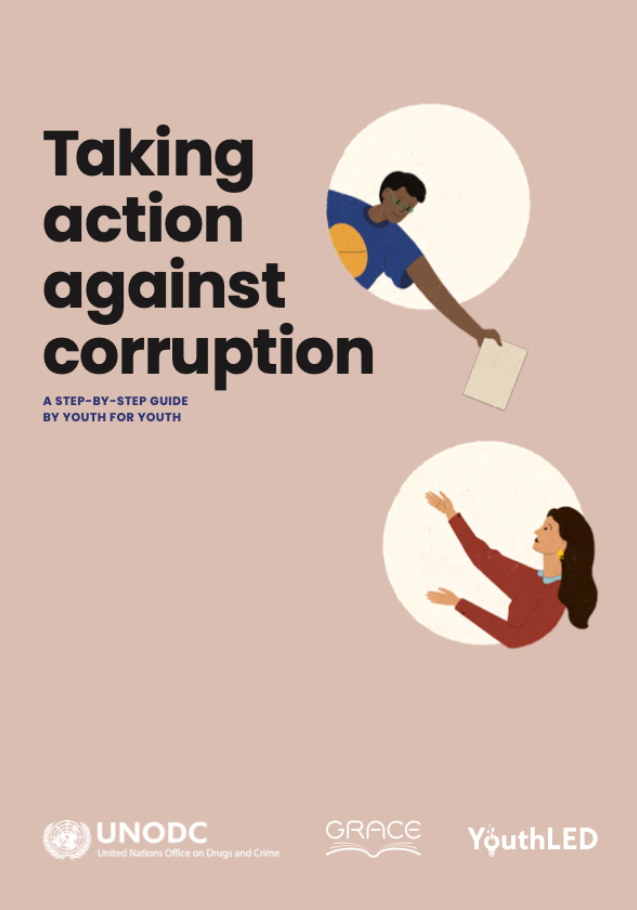
One of the first cohort’s most important contributions during its 2022-2024 mandate was the Taking Action Against Corruption toolkit, a practical 10-step guide created by young people, for young people. Informed by their own personal lived experience entering the anti-corruption world, the toolkit was designed to help inspire and empower other young people to turn their commitment to integrity into meaningful action against corruption.
When the second cohort joined the Board in 2024, members of the first cohort shared their experiences and what they had learned, fostering peer-to-peer learning and collaboration and supporting the co-creation of tools to advance the Board's mission.
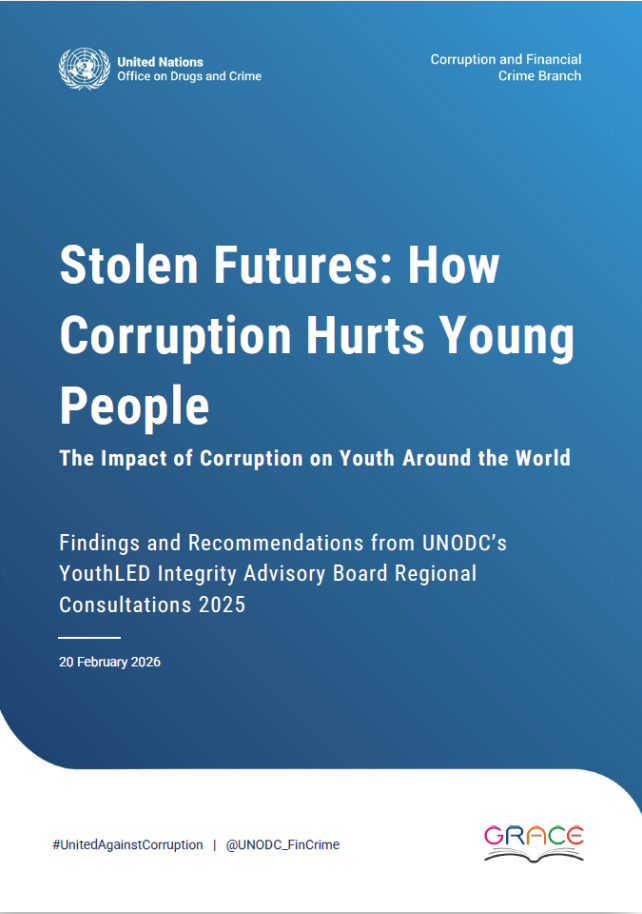
Working together, the first and second cohort (2024-2026) developed five Regional White Papers, drawing on consultations with more than 1,000 young people across Africa, the Americas, Asia, the Caribbean, and Europe. These consultations provided the space for young people to share their perspectives and experiences of corruption and propose recommendations on how governments and anti-corruption authorities, international organisations, and civil society can strengthen anti-corruption efforts and promote meaningful youth engagement. The insights from all five white papers were brought together in the Stolen Futures: How Corruption Hurts Young People report, ensuring that young people’s voices and proposed solutions informed a shared vision for tackling corruption.
The Board also opened doors for members to engage with the international anti-corruption community.
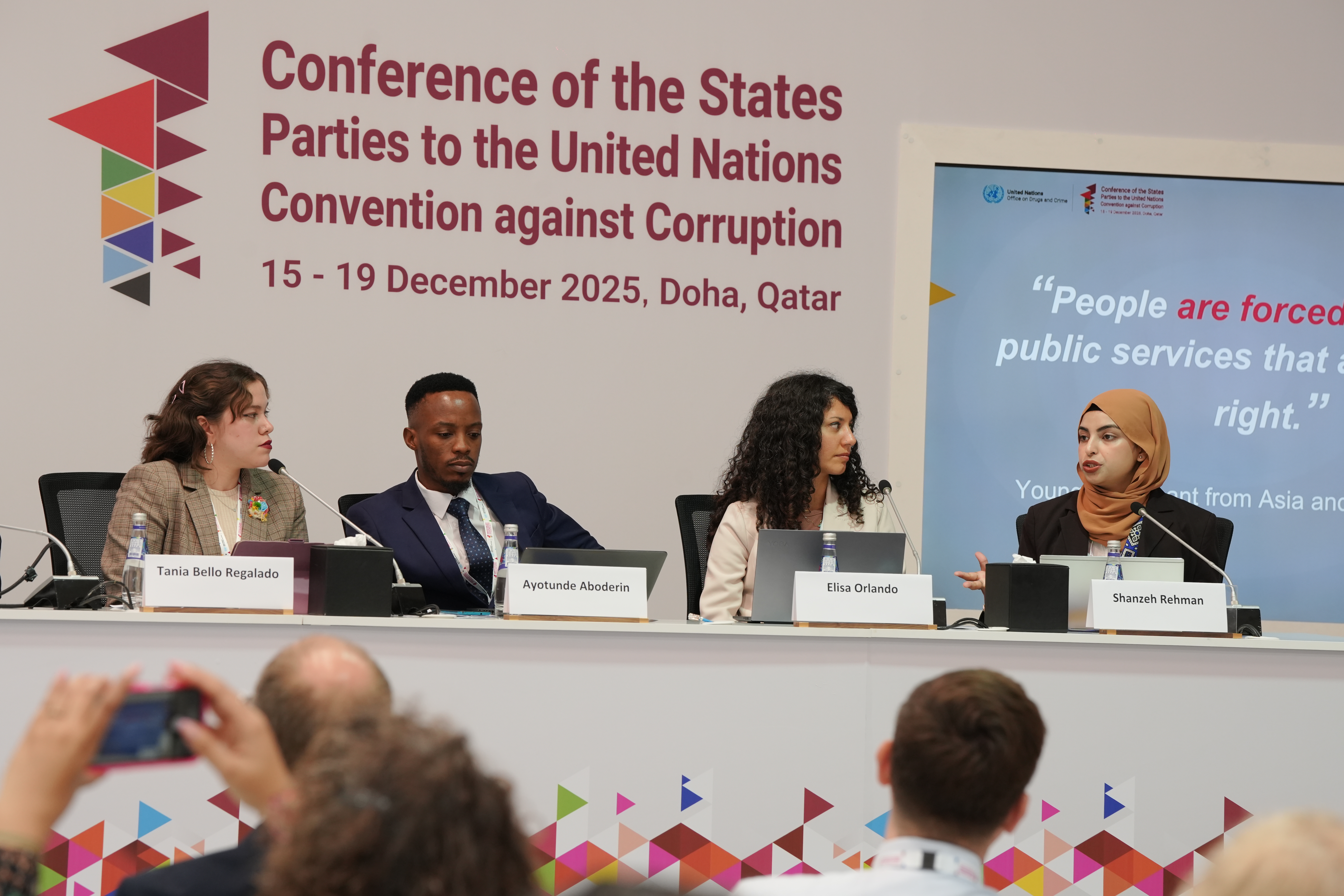
In December 2023, Board members attended the tenth session of the Conference of the States Parties to the United Nations Convention against Corruption (COSP10) in Atlanta, United States of America. COSP10 marked a milestone for youth participation, as it was the first time young people delivered an opening statement at the opening of Item 4 on Prevention. Two years later, in December 2025, several members participated in the eleventh session of the Conference (COSP11) in Doha, Qatar, representing the Board under UNODC’s Youth Delegation. This time, three Board members addressed delegates from around the world at plenary. These opportunities enabled members to engage with stakeholders, gain first-hand exposure to international policy discussions, and highlight the importance of meaningful youth participation in global anti-corruption efforts.
"I learned that young people must not simply be invited into conversations about integrity - we must be trusted to shape the solutions." - Diana Amondi Pasha, Kenya
Through these experiences, Board members demonstrated that youth engagement is not just about having a voice in the room but, also about ensuring that young people can contribute to decisions and policies and help shape the solutions that affect their lives and communities.
As the inaugural and first full-term 2022-2026 YouthLED Integrity Advisory Board concludes its mandate, its members will continue to carry the knowledge, experiences, and connections they have gained into their own work, organisations, and communities. At the same time, the 2026-2028 Board, members of the next cohort, will continue o build on the foundations laid by the previous cohorts and further strengthen the role of young people in promoting ethics, integrity, and anti-corruption.
"To me, the Board is more than a platform for youth engagement or a launchpad for integrity champions; it is a mechanism through which one generation prepares the next to carry forward knowledge, responsibility, and progress in advancing integrity, ethics, and anti-corruption." - Max Amanu, Uganda
The UNODC would like to thank all members of the 2022-2026 YouthLED Integrity Advisory Board, including Aime Ludovic Pegdwende Sawadogo (Burkina Faso), Christian Sangwa (Rwanda), Clara Carlotta Reiner (Germany), Dexter Arvin Yang (Philippines), Diana Amondi Pasha (Kenya), Eduardo Antonio da Silva (Portugal), Elisa Orlando (Italy), Esma Gumberidze (Georgia), Isaiah Thomas (Trinidad and Tobago), Jessica Kopo Enga (Botswana), Lizette Onesia Majoie Aboue (Benin), Logman Osman Ahmed Alhag (Sudan), Max Amanu (Uganda), Nhi Y Bui (Vietnam), Parnneh Mallobe (Liberia), Prekksha Bimali (Nepal), Rafael Oliveria Leite (Brazil), Salahaldeen Alazaizeh (Jordan), Serena Ibrahim (Lebanon), Sylvain Obedi Katindi (Democratic Republic of Congo), Tania Beatriz Bello Regalado (El Salvador), Tsenguunbileg Naranpurev (Mongolia), Uchkun Abduganiyev (Uzbekistan), and Vet Tetodom (Cambodia) for their time, passion, dedication, and unwavering commitment to advancing integrity.
Your contributions helped bring young people’s voices into anti-corruption conversations and initiatives and demonstrated the value of meaningful youth engagement in building a culture of integrity.