|
|
BUILDING INTEGRITY WORLDWIDE: IACA-UNODC VIRTUAL SCHOOL MARKS ITS 10TH EDITION |
March 2026 — “After these sessions, I will not sit quietly in the back or hide my voice. With the knowledge I have gained in the fight against corruption, I will become a whistle-blower, a voice and a tool to fight corruption in my community.” The words of one student from the Virtual Anti-Corruption School capture the powerful transformation that education can spark.
Recognizing the importance of building a new generation of anti-corruption champions, the United Nations Office on Drugs and Crime (UNODC), through its Global Resource for Anti-Corruption Education and Youth Empowerment (GRACE) Initiative, together with the International Anti-Corruption Academy (IACA), launched the Virtual Anti-Corruption School in 2021. Since its inception, the School has provided accessible anti-corruption education to the youth and emerging leaders committed to integrity and good governance.
Over the past five years, the Virtual Anti-Corruption School has received more than 1,500 applications, reflecting the strong global interest in anti-corruption education. Out of these, over 400 young leaders from 73 countries were selected. The School maintains strong gender balance with 50 per cent of students being female, while also ensuring that youth from LDC countries are prioritized.
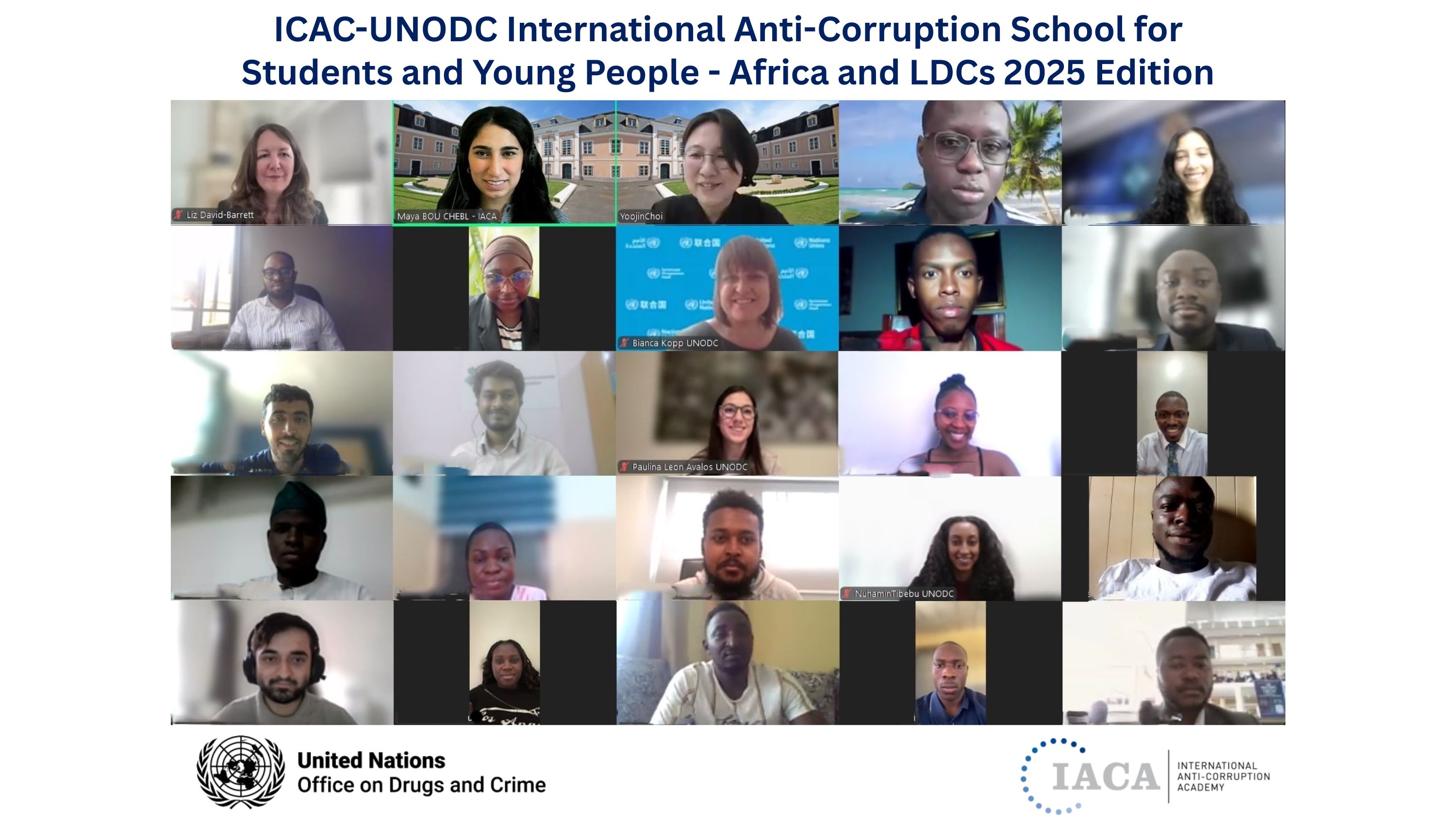
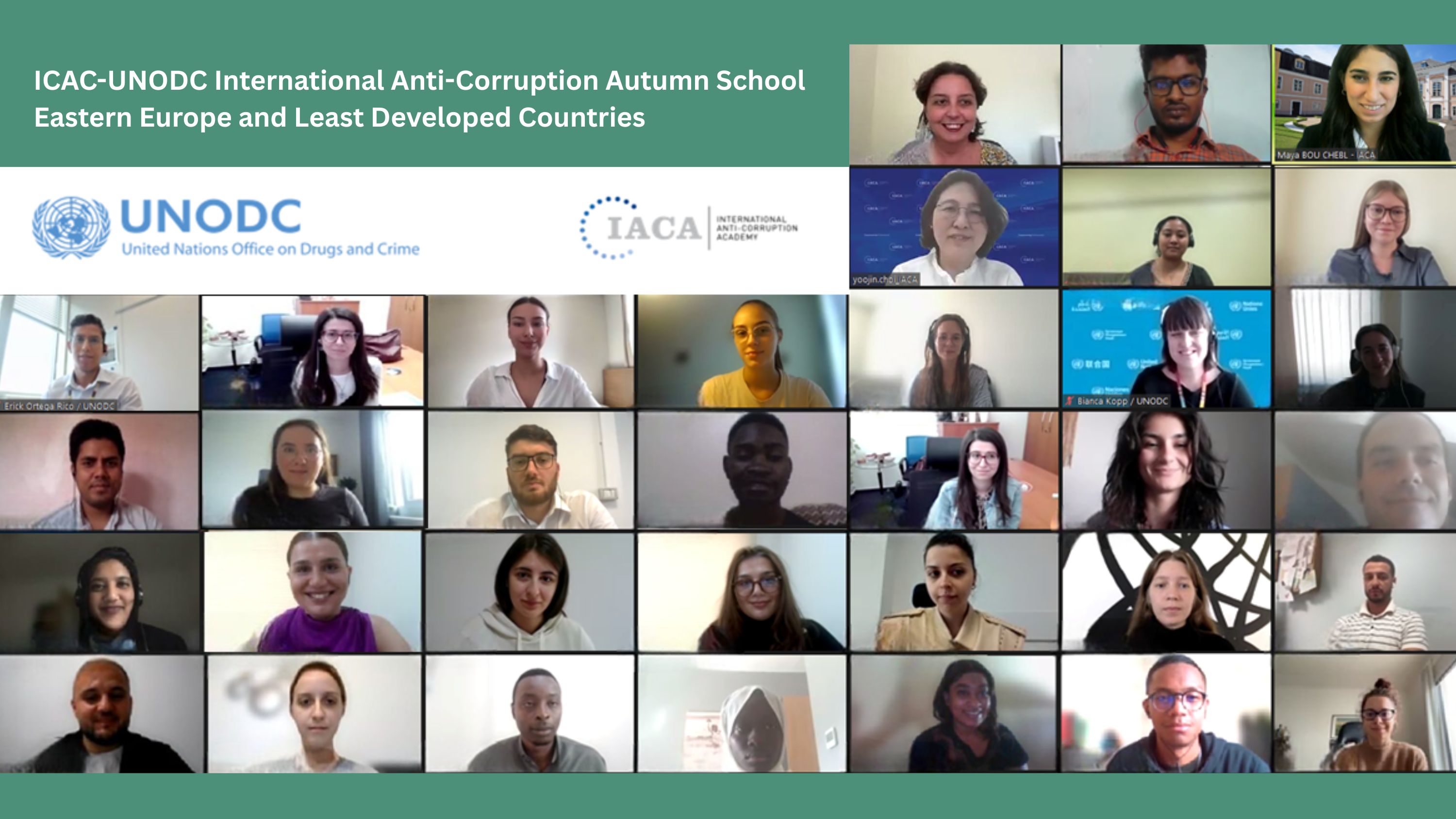
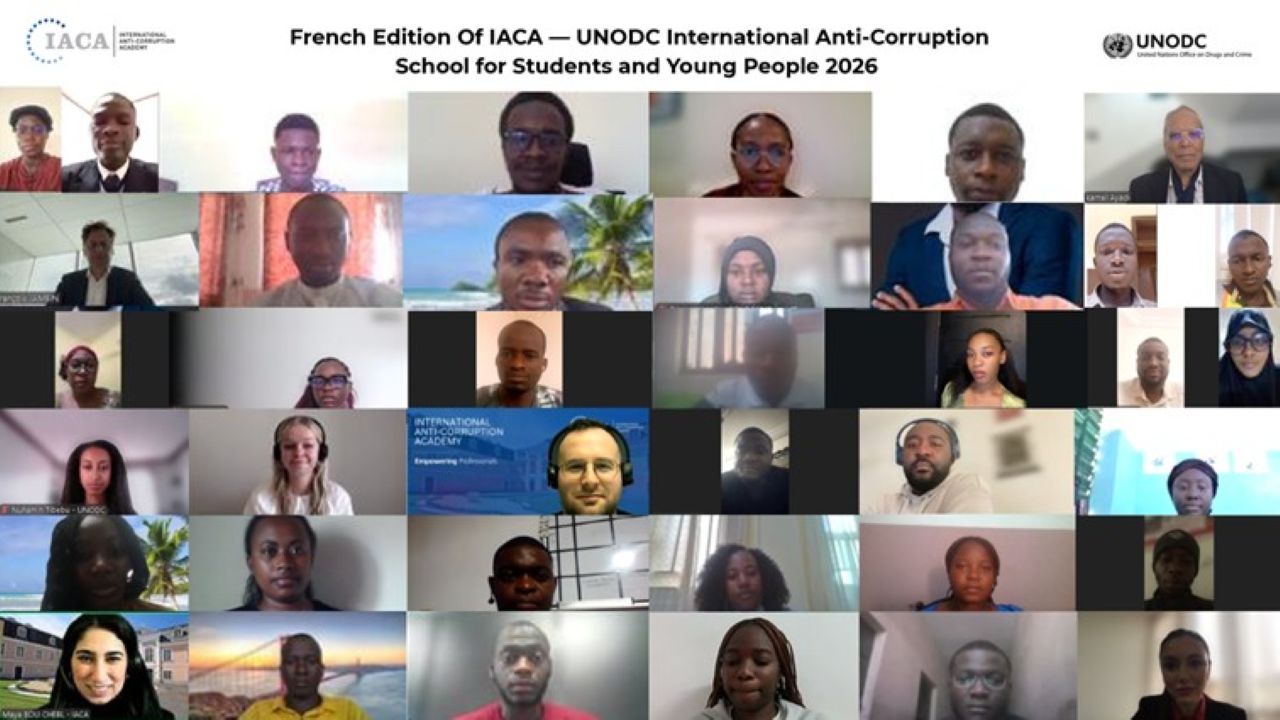
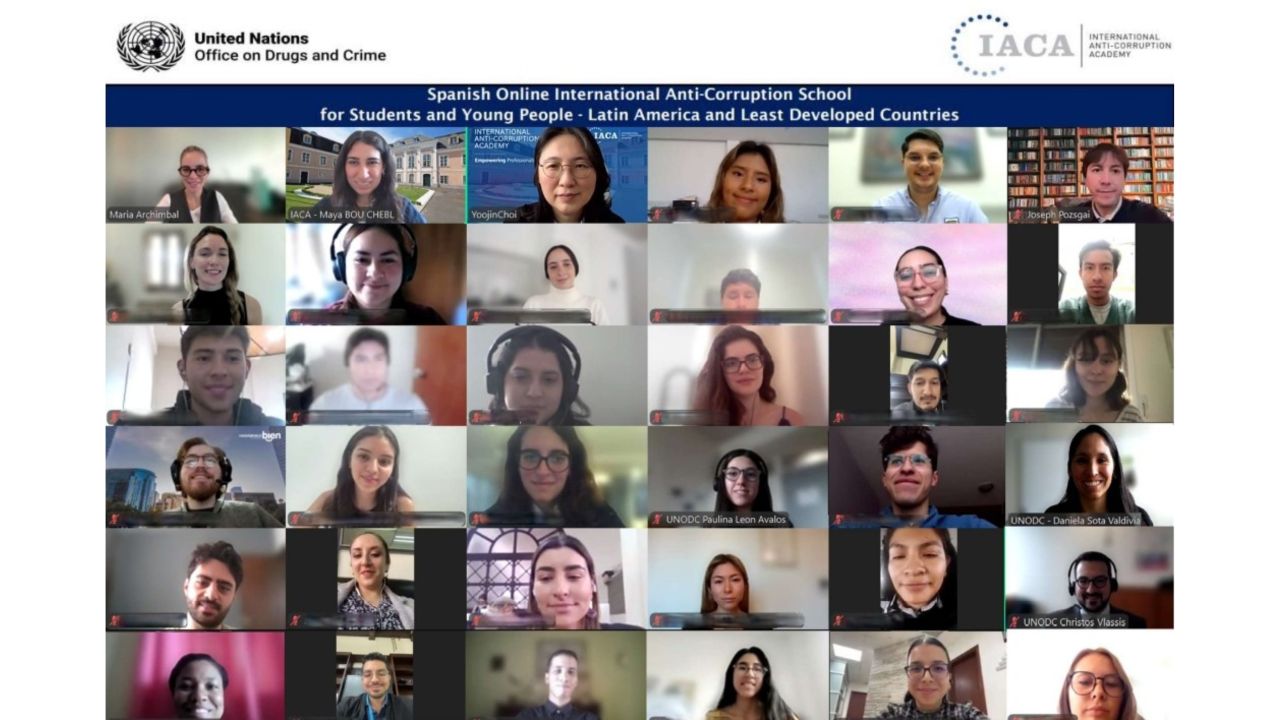
Across all ten editions, students have represented a wide range of regions, with particularly strong representation from Sub-Saharan Africa, South Asia, and Southeast Asia, as well as Central Asia, Eastern Europe, the Caucasus, and Latin America. The school has expanded both geographically and linguistically: eight editions were delivered in English, one in Spanish, and one in French.
“The strong collaboration between IACA and UNODC over the past five years has helped foster a vibrant young global community committed to advancing integrity and combating corruption. Through the Virtual Anti-Corruption School, we have worked together to make anti-corruption training more accessible to youth around the world. It is especially encouraging to see how participants continue to apply this knowledge in practice in their own contexts. We are proud to see this growing network expanding the shared mission of IACA and UNODC,” highlighted Ms. Yoojin Choi, Head of Training and Capacity Development Department at the International Anti-Corruption Academy.
The Virtual Anti-Corruption School features lectures and discussions led by renowned professors, practitioners, and experts from UNODC, providing students with both theoretical foundations and practical insights into the fight against corruption.
Throughout the programme, students explore a wide range of topics related to corruption and governance and the importance of protecting whistle-blowers. Sessions also examine corruption risks in key sectors such as health and infrastructure, private sector, journalism, and international legal frameworks. By connecting these themes to real-world examples, the School helps students understand how corruption affects societies and what practical measures can be taken to prevent and address it.
Students consistently highlighted how the School strengthened their confidence to speak up and act against corruption in their communities. “I believe that strengthening the rule of law is a solution in the fight against corruption,” shared one participant. “If we take the saying that the fear of law enforcement is the beginning of wisdom, we can see strengthening the rule of law as the starting point of a broader solution.”
Another participant emphasized the importance of employing multiple approaches to address corruption: “We have learned that the fight against corruption must focus on three areas: transforming mindsets, strengthening institutions that combat corruption, and adopting strong rules, along with ensuring that these rules are effectively enforced.”
Students frequently emphasize the relevance of youth engagement and collaboration in anti-corruption efforts. “Youth should be viewed as partners in the fight against corruption,” noted one student. “Young people have the agency and ideas to contribute meaningfully, and they need the space and the enabling environment to take action. They need to be highly engaged in all levels of decision making.”
Post-School surveys show high levels of engagement and a strong likelihood of applying the knowledge and skills gained from the sessions, demonstrating the strong impact of the School, which provides practical and actionable tools for addressing corruption challenges. As the Virtual Anti-Corruption School continues to expand, the partnership between UNODC and IACA demonstrates the importance of accessible, inclusive, and quality anti-corruption education in preparing the next generation of integrity leaders.
“This initiative would not have been possible without the vision and financial support of the Government of Austria. Beyond funding these schools, Austria—together with countries such as Chile, Ethiopia, Malta, Qatar and Slovenia—has been a strong champion of youth empowerment and anti-corruption education. Their leadership was instrumental in the adoption of the 2025 resolution on strengthening ethics and anti-corruption education for children and young people at the 11th Conference of States Parties in Qatar and has resulted in new innovative educational pilot initiatives conducted by UNODC in 2025,” concludes Bianca Kopp, Coordinator of UNODC’s GRACE Initiative.
The resolution “Strengthening education activities and programmes on ethical values, integrity and anti-corruption for children and young people as a significant pillar to prevent corruption and enhance trust in public institutions” has garnered exceptional global support. With more than 50 countries co-sponsoring it, the resolution reflects a clear, shared recognition that ethics, integrity, and anti-corruption education are essential foundations for preventing corruption and rebuilding public trust. This broad backing underscores a growing international commitment to equipping the next generation with the values and skills needed to drive lasting change.