|
|
5TH ANTI-CORRUPTION ACADEMIC SYMPOSIUM: ENSURING AI SERVES INTEGRITY |
Doha, Qatar, 13-14 December 2025 — In an era of rapid technological transformation, what role can artificial intelligence (AI) play in the fight against corruption? And how is AI shaping the way criminals operate to pursue their illicit gains?
These and other questions were at the heart of the 5th Anti-Corruption Academic Symposium, which explored both AI’s potential to strengthen the fight against economic crime, and the new malicious opportunities it creates for illicit actors.
“AI has helped create tools that can enhance corruption prevention efforts. We can now read multiple sources of data at an unprecedented speed and depth, making it much easier, for instance, to identify red flags in procurement processes or conflict of interests between politicians and company owners,” said Natlia Carfi, Deputy Director of the Open Data Charter, a group of over 250 governmental and non-state entities that seeks to promote policies and practices to ensure well governed data.
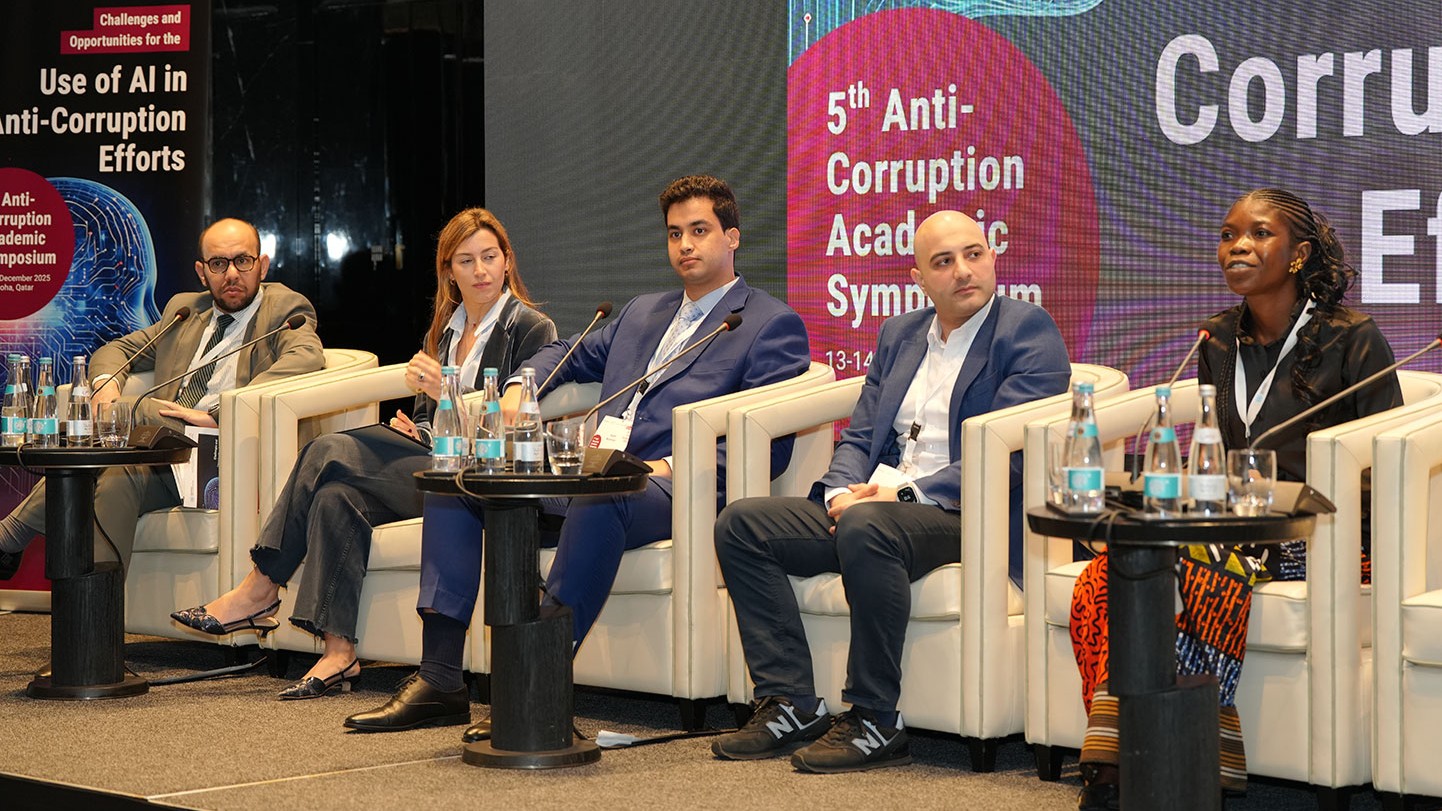
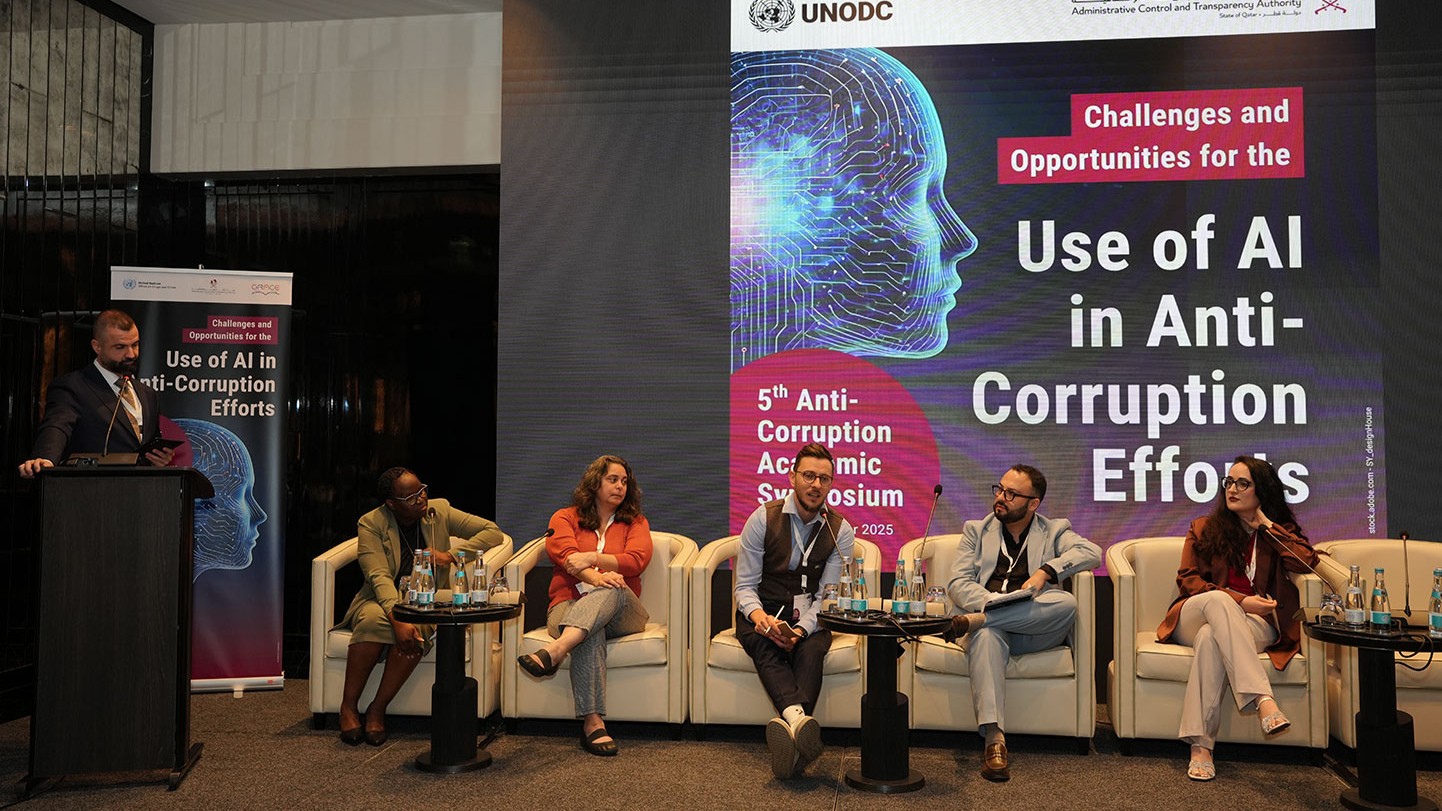
She was one of over 60panellists — including academics, researchers, practitioners and policymakers — who spoke at the Symposium helping build global momentum and visibility around an increasingly central issue in the fight against corruption: ensuring that technological innovation strengthens transparency and accountability rather than enabling or facilitating corrupt activities.
The Symposium was held in Doha, Qatar on 13 and 14 December, on the margins of the eleventh session of the Conference of the States Parties to the United Nations Convention against Corruption (COSP11).
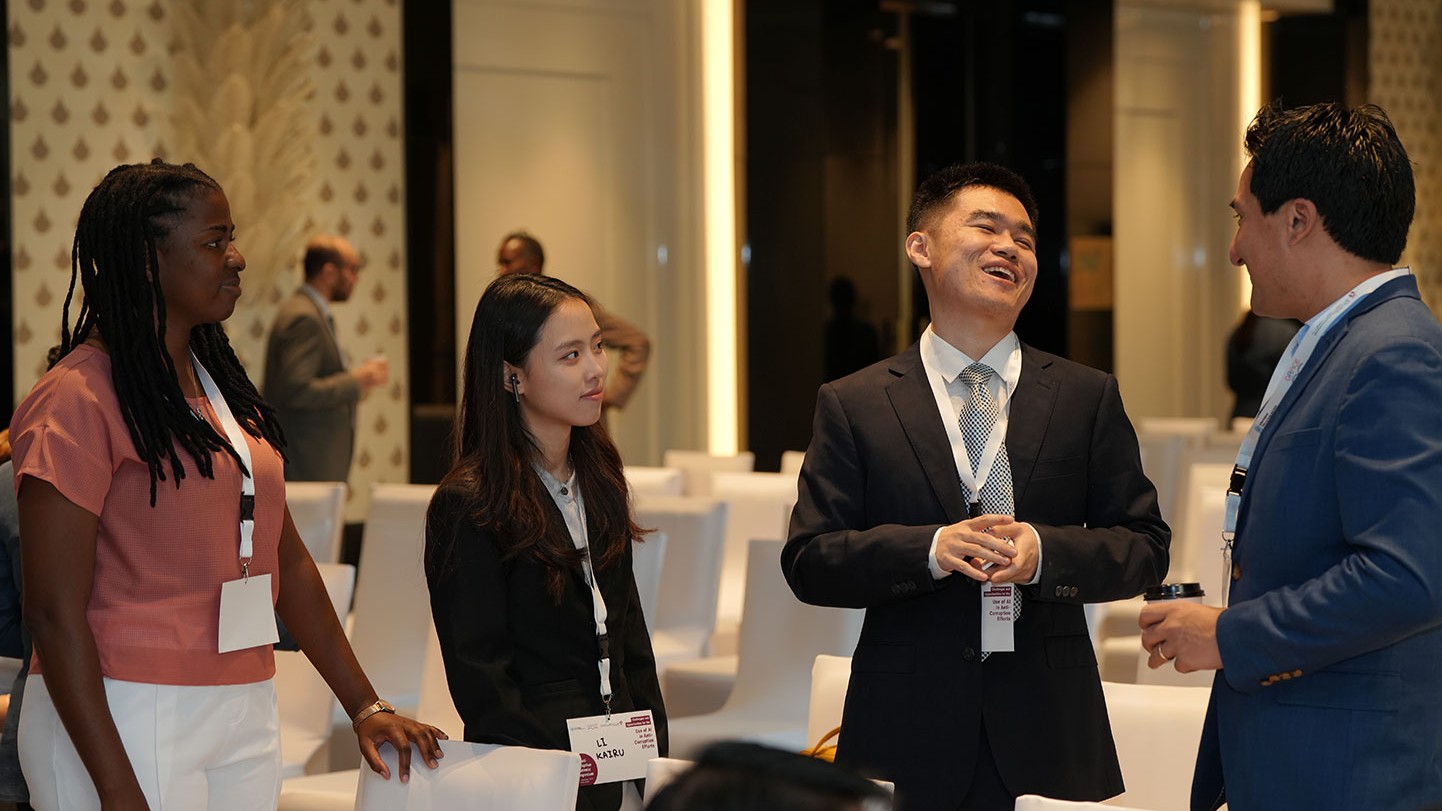
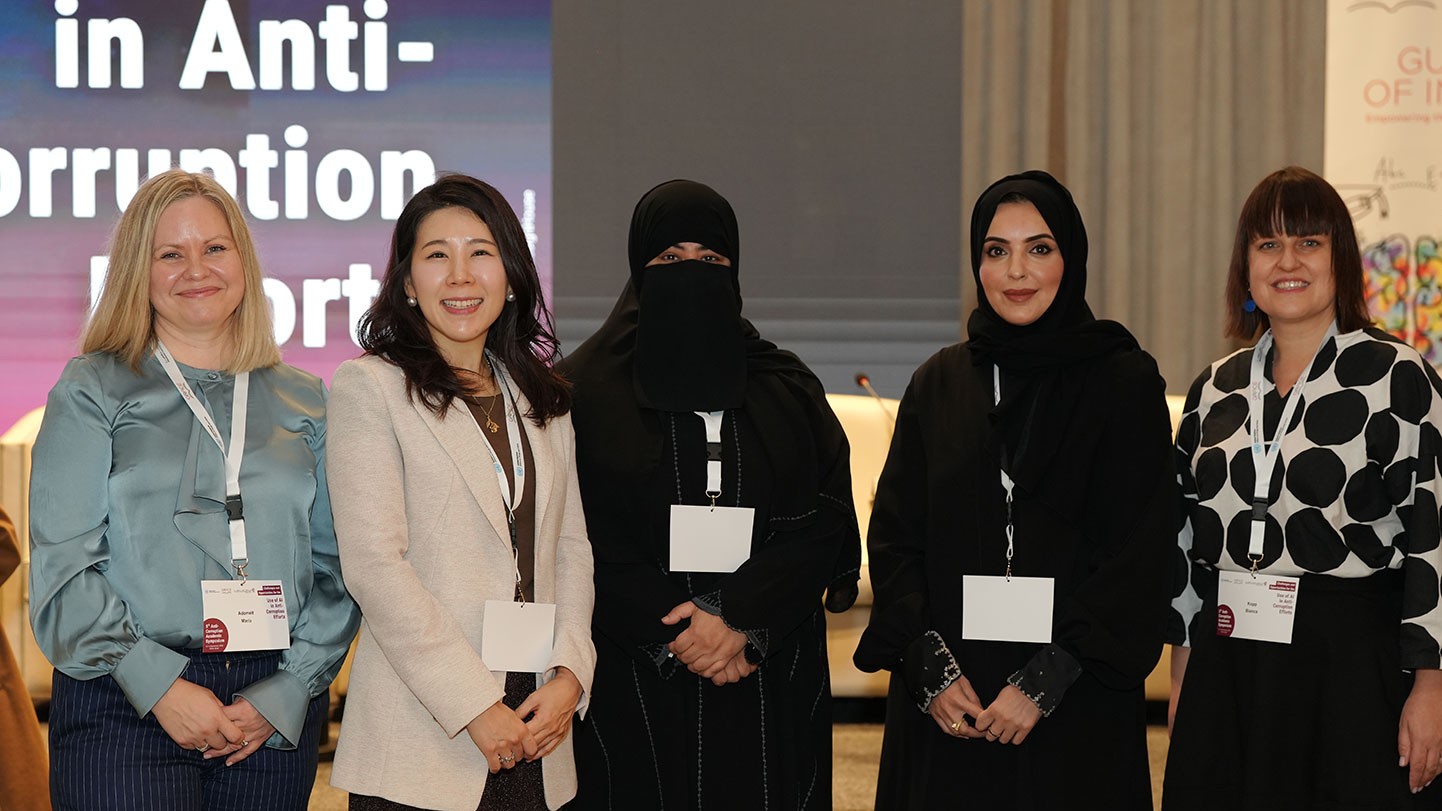
Supported by the Administrative Control and Transparency Authority (ACTA) of the State of Qatar, the panels’ insights reached and engaged over 100 participants from 76 countries, fostering a unique global dialogue on the potential of AI to drive transparency, accountability and integrity.
The different sessions explored the use of AI to uncover illicit patterns in the public sector, driven by top-down strategies; grassroots and bottom-up initiatives in harnessing technology to scrutinise corrupt actors and hold them accountable; and the use of satellite data and geospatial analytics for oversight activities (e.g. in monitoring illegal deforestation or big infrastructure projects).
The Symposium was organized by the Global Resource for Anti-Corruption Education and Youth Empowerment (GRACE), a UNODC programme that seeks to empower young people to be at the forefront of the fight against corruption.
While featuring seasoned and renewed experts and practitioners in anti-corruption, the event, in the spirit of GRACE’s mandate, championed young researchers, giving prominence to their work in a dedicated session.
Few sectors remain untouched by the impact of artificial intelligence. From early disease detection to finance and education, AI is transforming the way people process information and make decisions.
AI systems have an unprecedented capacity to analyse vast datasets, process information with minimal human intervention, and generate outputs that increasingly resemble human reasoning and language.
In the anti-corruption field, these analytical capabilities and enhanced access to information hold enormous potential to strengthen accountability in governance. By identifying hidden patterns, anomalies and risks across complex datasets, AI can offer significant opportunities to advance integrity and transparency.
However, there are challenges. “The quality and accessibility of data, the lack of technical skills and poor standardization can halt or hurt AI’s capacity to combat corruption," explained Carfi. AI also introduces new risks.
When misused or used without adequate oversight, AI may facilitate corruption and help criminals evade detection, investigation and accountability.
“No algorithm is perfect. Algorithms are as good as the data that they are trained on. This also means that when there are biases in data or when data is manipulated, the algorithm will miss important patterns,” explained Meeyoung Cha from the Max Planck Institute for Security and Privacy.
One antidote against the risks posed by AI is research, as Somaya Al-Maadeed from Qatar University explained. “Research is essential because it allows us to rigorously evaluate how [...] learning models behave on the real-world constraints, including biased data, adversarial manipulation, and governance gaps.”
Another is the development of strong regulatory frameworks, clear guidelines and ethical standards by States to ensure the responsible use of AI.
“Governments have a critical role to play to make sure that AI is put to good use. If we don’t care about AI, it is going to be used by the wrong people, by the corrupt, and it’s going to be used for the wrong purposes. We have a huge opportunity to use AI for good, to use AI for fighting corruption, and we really need to seize that opportunity,” affirmed Dieter Zinnbauer from Copenhagen Business School.
Human expertise and guidance as well as ethical and regulatory oversight can channel AI for beneficial purposes to strengthen integrity, rather than weakening it. International cooperation can expand this objective across countries.
"Collaboration remains the cornerstone of implementing anticorruption policies as each member of a team brings knowledge and experiences to the table that can help unlock new ideas and add value,” said Carfi.