|
|
2025 HACKATHON OF HACKATHONS: HOW YOUNG INNOVATORS ARE REDEFINING ANTI-CORRUPTION EDUCATION THROUGH AI |
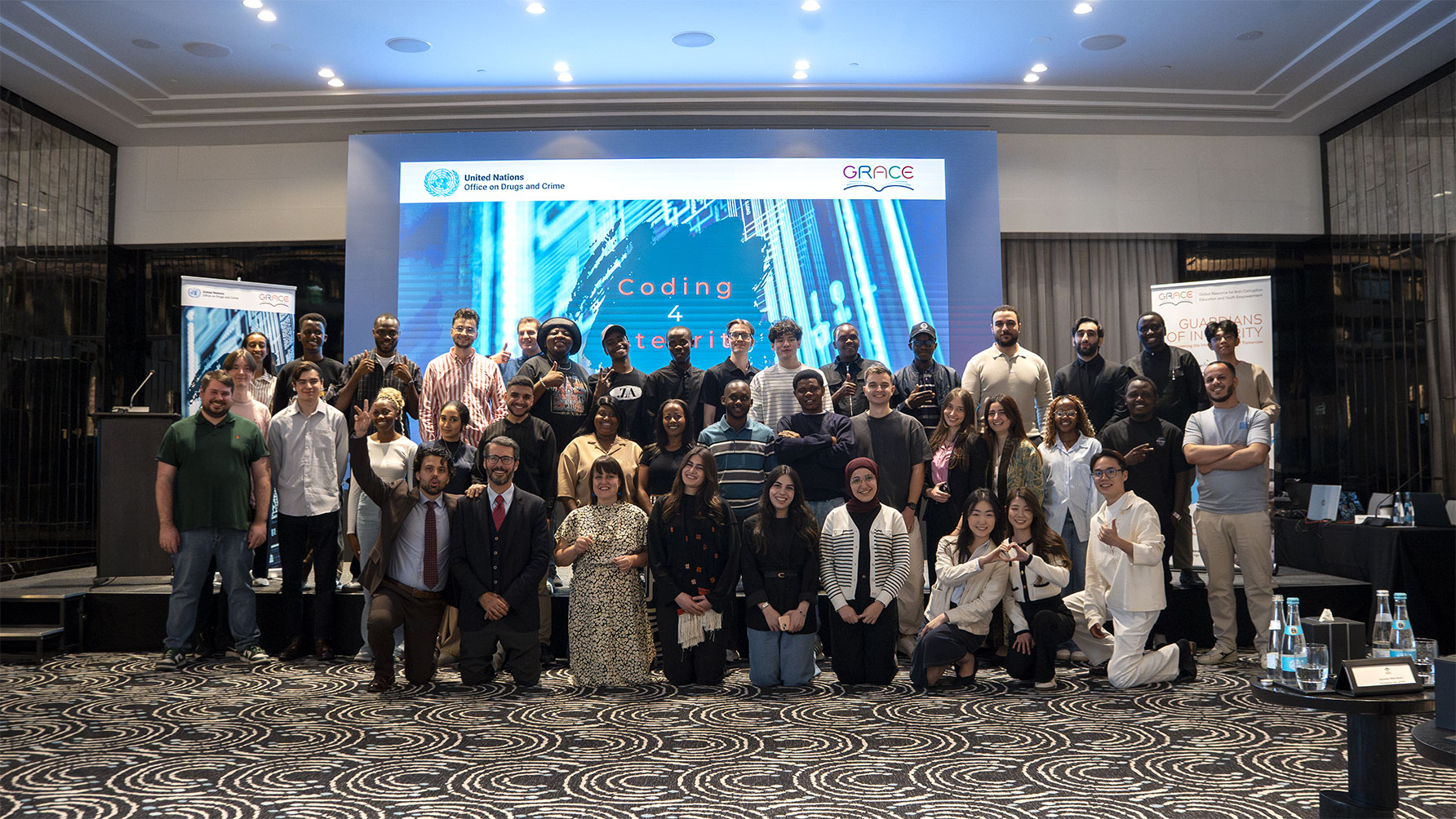
Doha, Qatar, 15-19 December 2025 — A group of young coders have put their tech skills at the service of integrity at the 2025 Hackathon of Hackathons, held in Doha, Qatar, in parallel with the eleventh session of the Conference of the States Parties to the United Nations Convention against Corruption (COSP11).
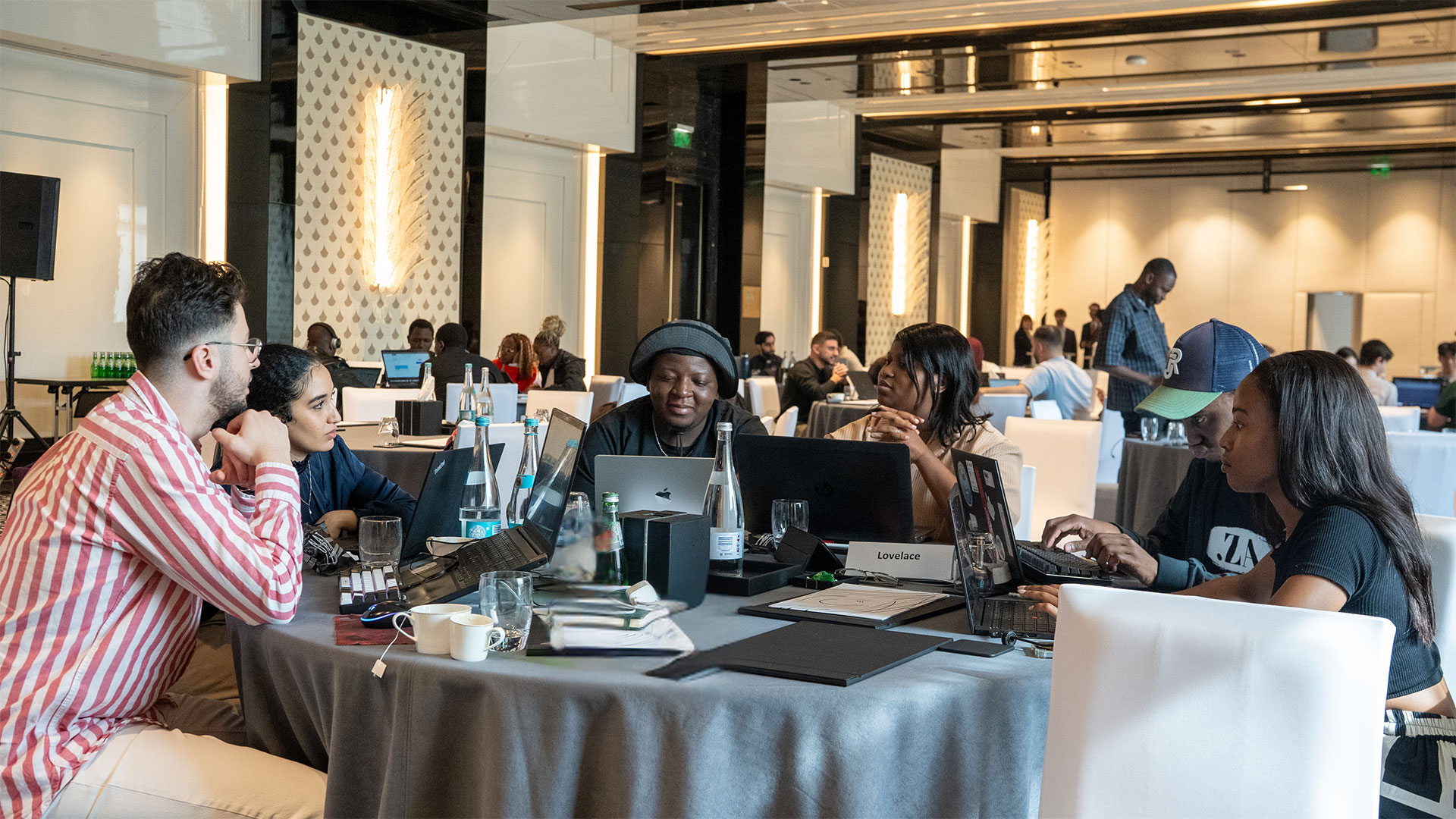
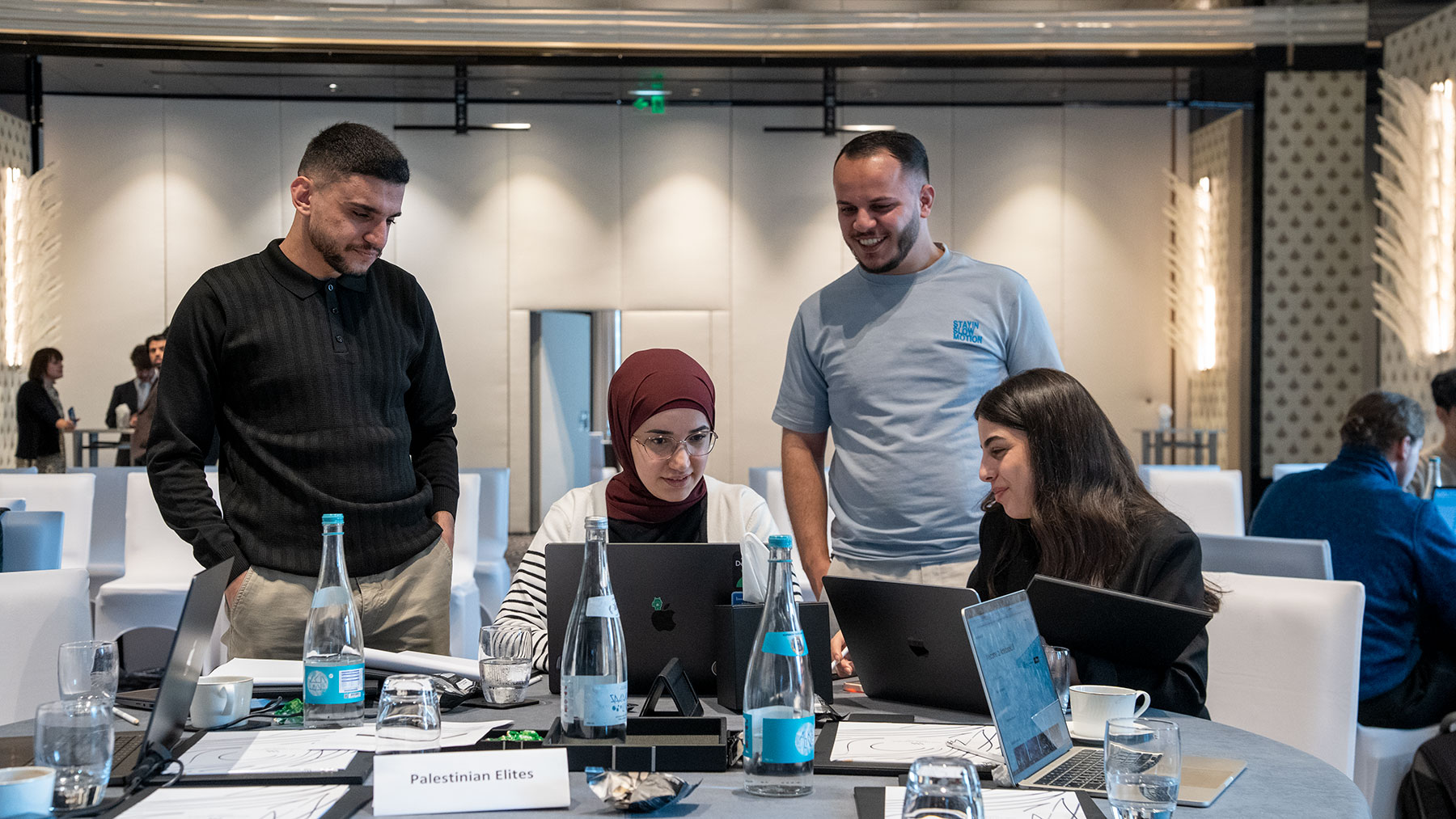
Coding4Integrity Hackathons are coding marathons in which participants compete in teams to develop technical solutions to address and prevent corruption.
The ‘hackathon of hackathons’ held in Doha formed part of the “Coding4Integrity 2.0.” programme launched by the United Nations Office on Drugs and Crime’s Global Resource for Anti-Corruption Education and Youth Empowerment (GRACE) Initiative and the Knowledge Foundation, a non-profit organization promoting global education.
Coding4Integrity 2.0. challenges participants to develop an AI-driven learning platform on anti-corruption, reimagining how integrity education can be delivered in the digital age.
“We see this platform as a valuable opportunity, not only for innovation, but also for dialogue, exchange of experiences, and openness to new approaches to address one of the most pressing issues globally: corruption,” said Mr. Eid Al Hajri, Director of Planning, Quality and Innovation at the Administrative Control and Transparency Authority (ACTA) of Qatar, which supported the initiative.
The UNODC-led Hackathons follow a relay model: they are a series of multiple competitions, each building on the coding outputs developed by participants in the previous editions.
At the first Coding4Integrity 2.0. Hackathon held in Oxford, United Kingdom, in 2024, coders developed the back-end infrastructure of the envisioned AI learning platform.
In Doha, participants worked on an “avatar” called “GRACIE”, a humanoid figure designed to make learning about corruption more fun, interactive and engaging. They also focused on the learning content which will educate future learners through storytelling, dialogue, and immersive experiences. The final AI education platform is scheduled for release later this year.
The anti-corruption education platform is based exclusively on UN resources ensuring that every output reflects globally agreed principles of transparency, accountability, and the rule of law.
The competition itself embodied the UN values of cooperation and respect for diversity. For many participants, it demonstrated how collaboration across cultures and a shared purpose can unite young innovators around a common commitment to integrity and fighting corruption.
“Collaborating with top winning teams from around the world was the highlight of the Hackathon of Hackathons for me. The exchange of ideas, trust and shared ambition made the experience deeply rewarding and inspiring,” shared one team.
Out of the 36 total participants divided into 13 competing teams, six champions were selected to take their ideas forward and together with UNODC’s GRACE Initiative and the Knowledge Foundation finalize the development of ‘GRACIE’.
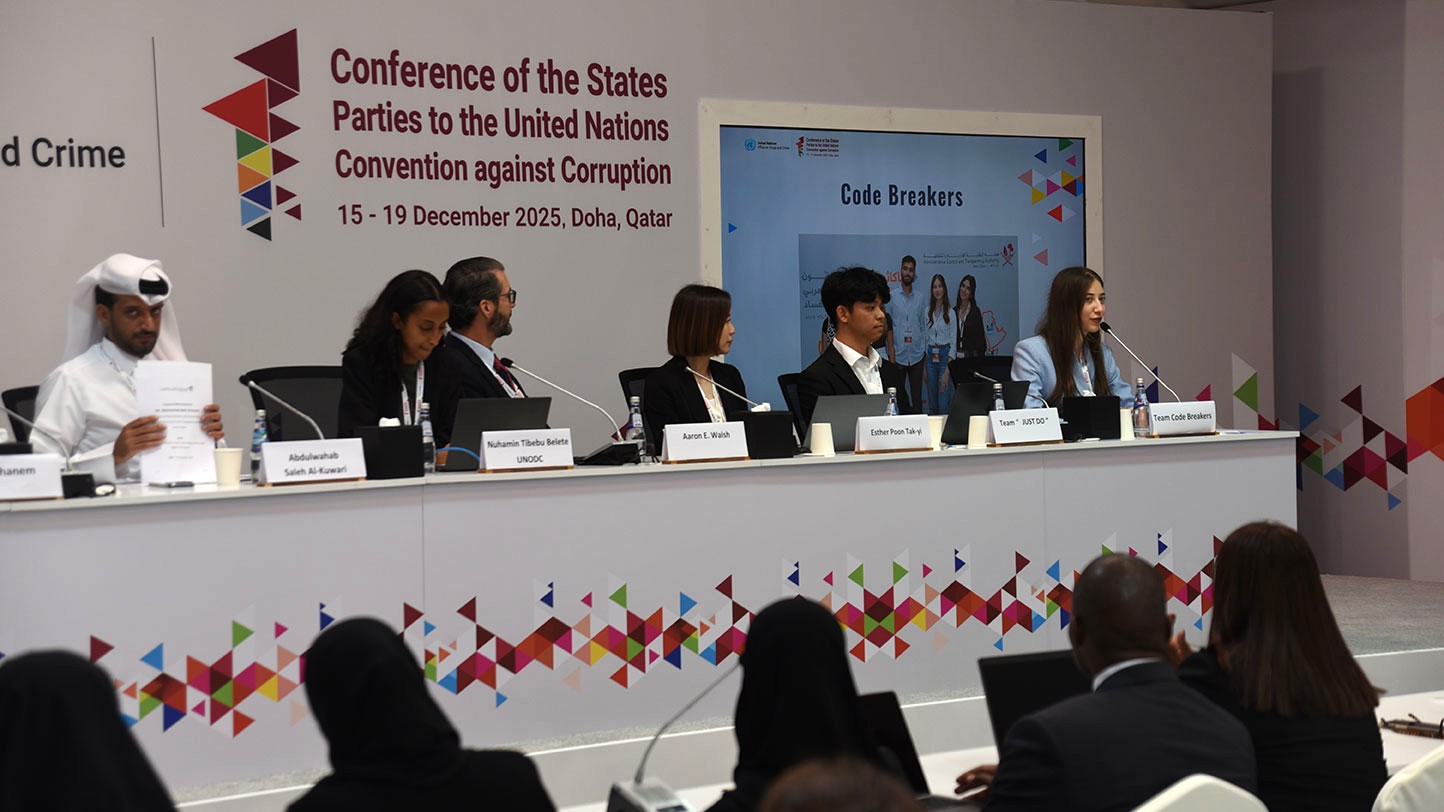
The impact of the ‘Hackathon of Hackathons’ reached beyond the competition itself. During COSP11, four teams were invited to share their experiences and innovations at a event “NextGen Integrity: Youth, Technology, and the Fight Against Corruption.” There, they presented their winning works and reflected on how the hackathon shaped their journeys as young leaders using technology to promote anti-corruption.
One team shared their journey saying, “Experiencing firsthand UNODC’s youth inclusion made us feel genuinely involved in integrity and anti-corruption work. We gained ownership of the topic and stayed engaged beyond the hackathon through continued interest, learning, and commitment.”
Through youth-led innovation, ethical AI, and cross-border collaboration, the Coding4Integrity Hackathons are helping turn global anti-corruption commitments into practical digital tools that can educate, inspire, and protect future generations.
The competitions stand as testament to the potential of young people as digital changemakers in leading the fight against corruption.