While electronic learning games and apps are widely spread, there are few card and board games available that focus on educating youth on corruption and rule of law issues. GRACE recognizes the educational value of games for use in the classroom and in non-formal educational settings.
With the aim of adding to the ludic range of options available to educators, UNODC collaborated with game designers - civil society organizations as well as educational institutions, to develop non-electronic games surrounding rule of law and corruption topics, involving secondary level students and educators in every step of the process.
These games empower the young generation to act with integrity when confronted with ethical dilemmas, and to understand the different manifestations of corruption.
 EDUCATIONAL GAMES
'Play for Integrity', a snakes and ladders-style game, which was developed by Integrity Action in the UK, enables students to act with integrity, recognize and challenge corruption. Teams of players are challenged to reach the end of the board by answering questions and competing in tasks surrounding key concepts of integrity.

Asociation Socioeducative Llere, in Spain, developed 'Running Out of Time' which is an original board game which teaches about corruption, terrorism, human trafficking and migrant smuggling. Assuming different roles in society, from law enforcement officials to politicians, players are faced with an "infection", an ever-spreading problem that adversely affects the different players. While working collaboratively and strategically to solve the problem, players learn about how the different characters are affected by the problem and how they can be involved in its solution. The game ends when the infection is contained or when it reaches a point of no return.

Brazil's University of São Paolo developed 'Purposyum - Challengers of Justice', a collaborative game that stimulates planning and strategic cooperation to find solutions to overcome thorny challenges to justice.
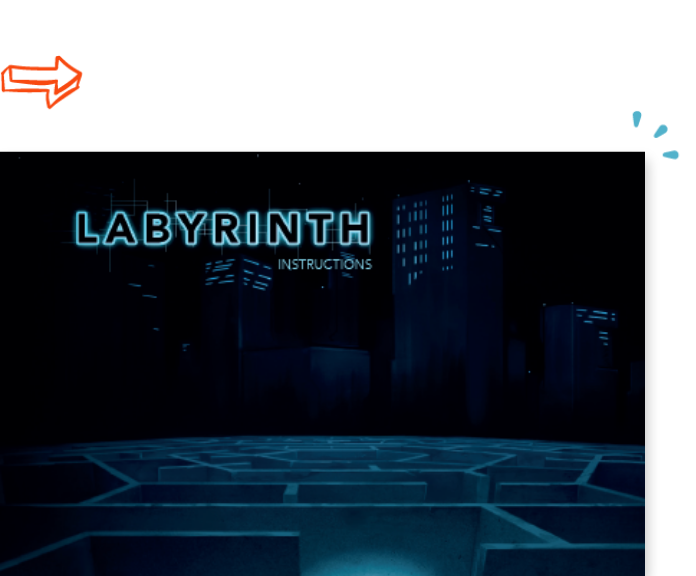
Game designers at Howard University, in the United States, developed the board game 'Labyrinth' aimed at strengthening students' resilience and critical thinking skills. Players attempt to achieve hero status by navigating the game board and making appropriate choices, while finding their way in a labyrinth where paths lead to violent extremism and radicalization, but also to tolerance and diversity. To be successful, players have to be able to challenge stereotypes, recognize propaganda and evaluate messages encountered online, and analyze scenarios including the risk involved in violent extremism.
Rutgers Preparatory School in the United States created 'Cyberstrike', a cooperative board game where players need to make up a common strategy to fight cybercrime. The ever-changing landscape of the game requires players to think critically, listen carefully, shift from a leadership role to a supportive role depending on the skill set required, anticipate consequences and formulate possible solutions. Requiring the players to work together, the game also strengthens their teamwork skills.
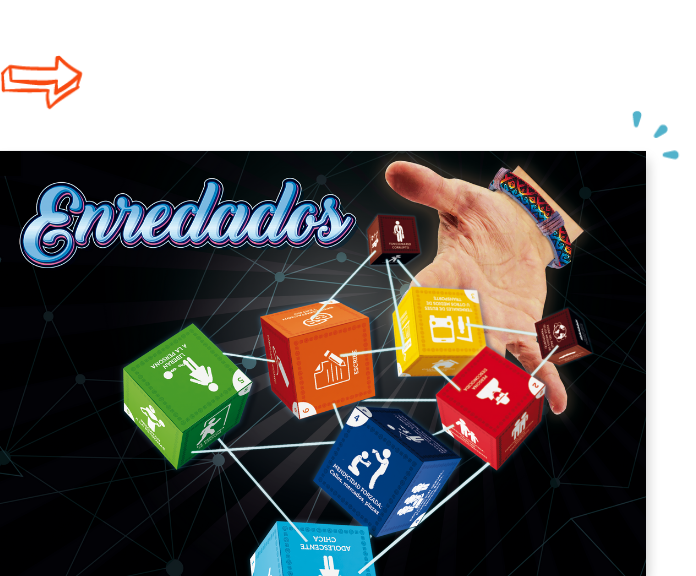
'Enredados' ("entangled") is an interactive game focused on storytelling to raise awareness about human trafficking. Through different cards and elements, players gather elements (such as characters, plot and conclusion) to build a story centred on the issue. This game is currently available in Spanish only.


 BOARD GAMES